

E-Commerce Face Existential Threat as Autonomous Shoppers Bypass Ads
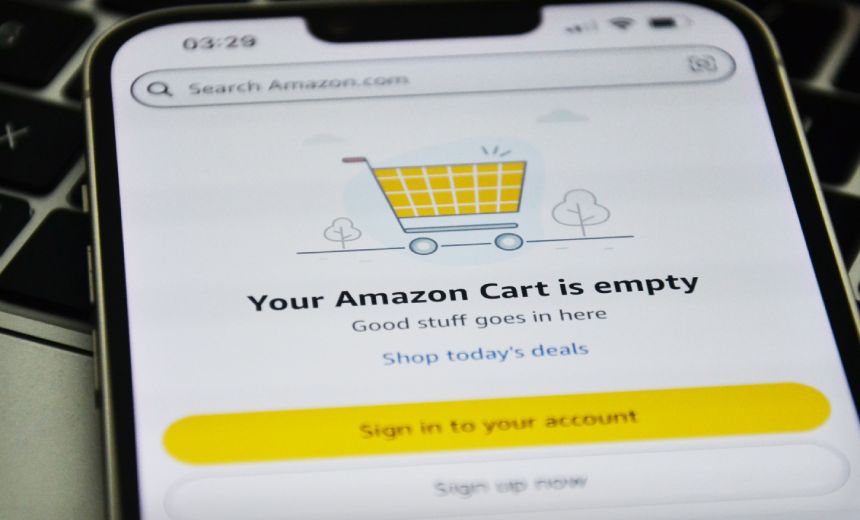
The online retail industry spent decades honing how to nudge people into clicking the buy button. Now it faces a customer who doesn’t want anything at all: the artificial intelligence shopping agent.
See Also: Going Beyond the Copilot Pilot – A CISO’s Perspective
When Amazon sued Perplexity weeks ago in San Francisco federal court, the company alleged that Perplexity’s Comet AI agent disguised itself as Google Chrome while accessing customer accounts without authorization. And Amazon does have a point: AI agents collect, process and share personal data across platforms. Once an agent has API access, it can pull purchase histories, transaction capabilities, payment aliases and shipping addresses.
Perplexity countered that Amazon cares more about serving ads and sponsored results than easier shopping – and it, too, has a point. Beneath the accusations of computer fraud and lost privacy lies a loaded question for online shopping platforms like Amazon. What happens to e-commerce economics when shoppers never see a digital storefront?
Digital storefronts aren’t just places where transactions happen. They’re carefully constructed online facades where sponsored search results easily outweigh organic results, where the default items selected for each purchase are chosen by an algorithm that favors sellers who pay a subscription fee. Advertising earned Amazon $56.2 billion in revenue during 2024 – about 10% of total revenue, excluding the AWS cloud computing business. It’s a figure that likely understates Amazon’s revenue from sellers on its site, since the company encourages vendors to outsource logistics to its warehouses and advertising revenue doesn’t include fees such as “Professional Selling Plan” subscriptions.
Ads are the irreplaceable profit engine for e-commerce sites, said Nikhil Lai, analyst of performance monitoring at Forrester. They operate at margins above 50% compared to the 10% margins typical of offsite advertising. Unfortunately for Amazon and other retailers, AI agents aren’t as susceptible to advertising as humans.
Forrester polled more than 500 adults across the United States, United Kingdom and Canada and found that half of Gen Z and millennial adults are willing to complete checkout and payment on ChatGPT, Gemini or Perplexity. Lai predicted that agentic commerce’s popularity will reduce retail media ad sales by a fifth.
Amazon CEO Andy Jassy said on an earnings call last month that the customer experience for AI shopping agents was not good, citing lack of personalization and user-specific shopping history, along with bungled delivery estimates and pricing. But Jassy indicated that Amazon expects to partner with third-party agents over time – an acknowledgment suggesting Amazon recognizes it cannot simply block agents indefinitely.
Alliances forming could determine who controls product selection. Quentin Montalto, chief operating officer at ShipperHQ, said that Shopify’s alignment with OpenAI and BigCommerce’s partnership with Perplexity represent more than technical integrations. Taste-making is starting on the social platforms where shopping happens today, and agents will follow that signal, he said. If agents become the dominant interface between consumers and products, marketplaces become fulfillment engines rather than creators of demand.
Agentic AI shopping will shift sellers away from buying screen real estate to earning a place inside the agent’s decision logic, said Andy Ash, chief information security officer at Netacea. Agents will depend on structured product data, availability, trust signals and reputation frameworks. This creates monetization opportunities for tech companies including API access fees, data access tiers and affiliate commission models. The key is differentiating between verified agents and high-risk automated traffic, he said.
Amazon could adapt by becoming the preferred data source for AI agents rather than fighting to keep them out. Prakash Gurumoorthy, general manager for Europe, the Middle East, Africa and the Asia Pacific regions at VTEX Commerce, predicted that transaction and conversion fees will become standard, with AI agents and their platforms earning a percentage of each completed transaction – although money extracted from fees likely won’t replace decreases in revenue from lost advertising.
Whether agents will increase or reduce price competition depends on how ranking logic is designed. If agents optimize purely for price or reviews, they could consolidate demand toward a few dominant sellers. Montalto said he expects spot pricing to emerge for high-volume searched items, with demand driving price and eroding brand loyalty as purchase decisions shift toward pure value optimization. The commoditization threatens Amazon’s ability to extract premium pricing from sellers competing for visibility.
For retailers exploring adaptation, Lai said one approach involves non-competitive retailers pooling audiences to scale addressability. A regional grocer and consumer electronics retailer could ally because they can identify more shoppers with minimal worry of relinquishing insights to competitors. Nearly half of U.S. business-to-consumer marketing executives in Forrester’s 2023 survey said having too many retail media networks to manage is one of their greatest challenges.
The Amazon-Perplexity lawsuit may establish early precedents about whether platforms can exclude AI agents that do not operate on their terms. But even if Amazon prevails in court, the company faces a strategic dilemma. Blocking one agent while dozens of others emerge leaves it fighting an endless rearguard action. Embracing agents could mean surrendering the high-margin advertising business that makes e-commerce profitable.
The company that revolutionized online retail by making shopping frictionless now confronts technology that makes it too frictionless.