

WEF’s Akshay Joshi on AI Risks, Geopolitics and the Growing Cyber Divide
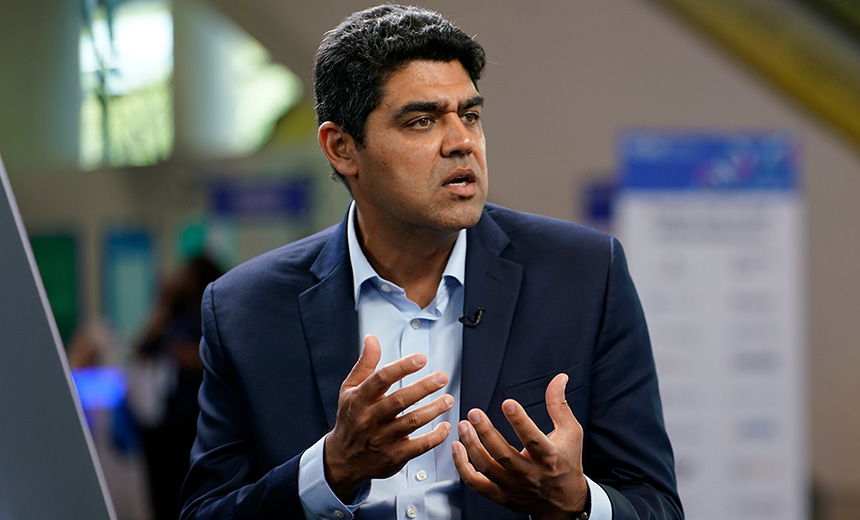
The cybersecurity landscape has grown more complex than ever. “Rapid advances in AI, coupled with a complex geopolitical backdrop and new supply chains being forged at breakneck speed – all of these have very real ramifications on cybersecurity,” said Akshay Joshi, head of the Center for Cybersecurity at the World Economic Forum, or WEF.
See Also: AI Impersonation Is the New Arms Race—Is Your Workforce Ready?
WEF’s Global Cybersecurity Outlook 2026 captures the scale of this compounding pressure. Over 90% of large organizations now account for geopolitical risks in their cyber strategies, even as supply chain vulnerabilities – cited by 65% of organizations as a barrier to cyber resilience – continue to grow alongside rapid artificial intelligence adoption.
Addressing this complexity requires cybersecurity leaders to move beyond siloed strategies and treat the convergence of AI, geopolitics, supply chains and workforce constraints as an interconnected challenge.
In this video interview with Information Security Media Group at RSAC Conference 2026, Joshi also discussed:
- Why the agentic era can’t advance without cybersecurity at its core;
- How geopolitical resets are expanding resilience thinking beyond individual organizations to subsea cables and hyperscaler environments;
- How AI could democratize access to cybersecurity tools for underserved organizations.
At World Economic Forum, Joshi reinforces the importance of cybersecurity as a strategic priority and drives global public-private action to address systemic cyber risks. He previously held management roles across maritime transport and public relations.