

Advanced SOC Operations / CSOC
,
Artificial Intelligence & Machine Learning
,
Next-Generation Technologies & Secure Development
Founder and CEO Eric Foster Wants to Reduce Dwell Time and Scale Engineering Teams
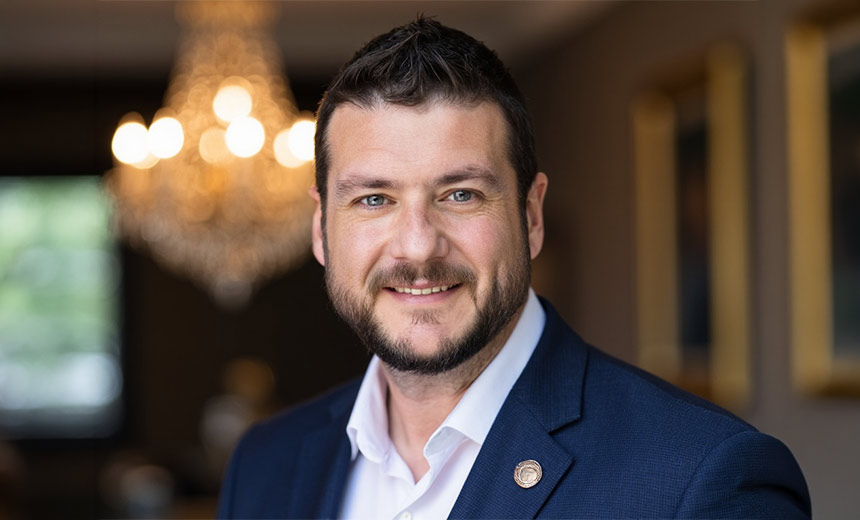
A security operations startup led by the former president of Cyderes raised $250 million to orchestrate and unify existing technologies with artificial intelligence.
See Also: The Comprehensive Guide to Cloud Security and SOC Convergence
The Crosspoint Capital Partners-led Series B funding round will enable Sarasota, Florida-based Tenex to pursue further reductions in response time given that attackers can now move from initial compromise to command-and-control in under a minute, said founder and CEO Eric Foster. He said Tenex is investing in tools that allow its platform to take direct action like isolating threats or removing malicious content.
“We believe fundamentally that we’ve got a really significant advantage right now in this absolutely incredible inflection point in the history of cybersecurity,” Foster told Information Security Media Group.
Tenex, founded in 2024, employs 73 people and closed a $27 million Series A funding round less than seven months ago, which was also led by Crosspoint. The company has been led since its inception by Foster, who spent nearly four years as president of managed detection and response provider Cyderes, 16 months as CISO/COO of Fishtech, and more than three years as head of customer success at RiskIQ (see: Supply Chain Attacks Move Downmarket).
How Tenex Spots Threats That Traditional Endpoint Tools Miss
The best AI companies will be defined not just by their models, but by the people building and refining them, Foster said. Because AI significantly boosts individual productivity, each additional hire generates exponentially more output, meaning engineers can now produce in a month what previously took a year. Companies should grow engineering and data science to capitalize on that productivity, he said.
“We’re hiring as many software engineers and AI engineers and data scientists as we can,” Foster said. “Those people are literally 10x exponentially more effective than they used to be.”
Most providers only review a small fraction of alerts due to human limitations, but by leveraging AI and automation, Foster said Tenex can analyze all incoming telemetry and deliver verdicts in under a minute. This shift from partial visibility to full coverage represents a fundamental change in how security operations are conducted, Foster said.
“One of our fundamental platform shifts here at Tenex was the AI and the automation that we’ve built allows us to look at and verdict 100% of the customer’s alert telemetry, and we can do it in less than a minute, probably better than a human analyst can do alone,” Foster said.
By integrating underutilized data sources from the network and improving model performance, Foster said Tenex aims to detect threats that traditional endpoint-focused approaches may miss. This is complemented by ongoing investments in model optimization, which Foster said will ensure that AI systems become faster, more accurate and more efficient over time.
“I think AI is going to bring about the biggest single game change in the way that we’re able to perform cybersecurity operations and the way that we’re ultimately able to achieve cybersecurity outcomes as an industry,” Foster said.
How Humans, AI Agents Work Together at Tenex
Humans oversee, validate and continuously improve AI-driven decisions, he said, enabling automated actions when appropriate while maintaining human judgment for critical decisions. AI handles the majority of routine tasks while human analysts focus on complex, high-value investigations, which Foster said ensures accountability and continuous improvement.
“Every decision we make, every action we take, is backed by 100% human decision-making and accountability,” Foster said.
Beyond detection, Foster said Tenex is investing in capabilities that allow its platform to take direct action such as isolating threats or removing malicious content. Using agentic AI and advanced automation techniques, Foster said Tenex’s platform can execute tasks even in environments without traditional integrations, reducing the time between detection and response and limiting dwell time.
“Things like mean time to respond, mean time to detect, false positives, alert coverage, those are all really important metrics, but the only one that really matters is dwell time,” Foster said.
Foster said Tenex competes against legacy consulting firms, early managed detection and response providers and newer AI-native companies. Many incumbents are constrained by legacy architectures and business models, making it difficult for them to fully embrace AI-driven approaches. In contrast, Tenex is built from the ground up with AI at its core, which Foster said allows it to move faster.
“We think there’s maybe no better time in human history to build a business, to grow a business, to scale,” Foster said. “We’re projecting to hire somewhere between 250 and 300 people this year alone.”