

Anti-Money Laundering (AML)
,
Artificial Intelligence & Machine Learning
,
Finance & Banking
AI Agents Target Anti-Money Laundering at Major Global Banks, Cut Manual Probes
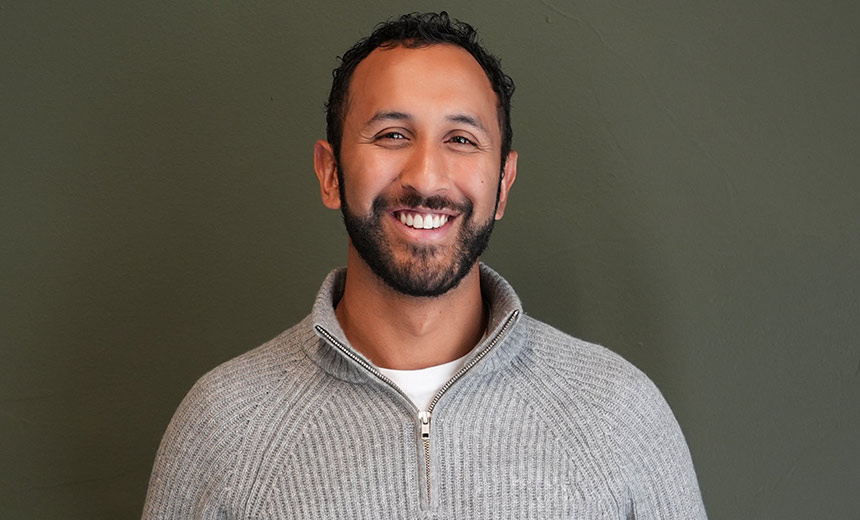
A startup founded by a former Meta product leader raised $75 million to use artificial intelligence to address financial compliance and financial crime prevention.
See Also: The Power of Peer-to-Peer Communities
The Sapphire Ventures-led Series B funding round will help Bretton AI evolve from simple sanctions reviews to complex anti-money laundering investigations through the use of advanced long-horizon agents, said co-founder and CEO Will Lawrence. The money will empower human financial crime investigators by automating data retrieval and analysis tasks for complex investigations, he said.
“There’s an once-in-a-lifetime opportunity to be the leaders in financial compliance,” Lawrence told Information Security Media Group. “We think we have the shot to be that number one platform in the space, and so we want to move really quickly to capitalize on it. We’ll continue to invest in really incredible engineering and product and design to make sure we can incorporate the best in AI.”
The company, founded in 2023, employs 82 people, rebranded Tuesday from Greenlite AI to Bretton AI and has raised 95 million, having last completed a $15 million Series A round led by Greylock in May 2025. The company has been led by Lawrence, who previously spent nearly three years at Meta, culminating in a role focused on in-app payment and machine learning products for app developers.
The Role of AI Agents, Humans in Complex Investigations
Bretton AI has largely addressed initial triage with AI agents and is now concentrating on more complex escalations, where investigations often require deep analysis across fragmented systems. Agents handle data collection, retrieval from legacy and third-party systems, document parsing, transaction analysis and synthesis, while the human investigator focuses on judgment and decision-making, Lawrence said.
“I think of AI like a paralegal for a lot of these investigators, compiling all the information, summarizing the keynotes, and allowing humans to make a decision and do red lines versus starting from scratch,” Lawrence said. “So, that’s really what we’re doing to empower the best investigators to have the most impact.”
Traditional supervised machine learning excels at scanning massive datasets to flag suspicious patterns, but it struggles with contextual reasoning and unstructured information required for deeper analysis, Lawrence said. Financial crime investigations are inherently iterative, and he said modern AI agents can now mirror that workflow since they’re capable of self-prompting and iterative reasoning loops.
“We do financial crime investigations,” Lawrence said. “Back in 2023, you could do an investigation that took a human maybe five minutes, using use AI to solve it. In 2025, when the reasoning models came out from OpenAI, you saw investigations that took 30 minutes or so. Now we’re often seeing that we’re doing investigations that take five-to-six hours for a human to do.”
Bretton started with sanctions review, which Lawrence said early AI models could handle because it required more structured pattern matching. From there, Bretton got into Know Your Customer compliance, which introduced greater complexity and customer onboarding workflows. Early AI models lacked the reasoning capacity required for anti-money laundering, which is unstructured and iterative, he said.
“We knew we wanted to ultimately solve the whole gamut of financial crime, but when you had less sophisticated models, sanction reviews were the primary thing,” Lawrence said. “Reviews were the primary thing you could do. Our ambition was always do larger ones. But now, as the technology has gotten so good, we can go to the most complicated ones, which is the world of anti-money laundering.”
What Highly-Regulated Banks Need to Address Financial Crime
Bretton AI’s transition from serving fintech startups to partnering with large, highly-regulated banks means the company must often connect to hundreds of fragmented legacy and internal platforms. To meet these standards, Bretton AI has built trust infrastructure, which includes model validation systems, precision and recall testing, regression testing, drift management and full audit traceability.
“Instead of five systems you’re working with, you’re working through 180 systems that they need connected to,” Lawrence said. “They have a lot more complex operations. They don’t just have one line of business like payments. They might have a payments business and wealth management business and retail business, all of which have different procedures by which you might need to investigate.”
The original Greenlite AI brand aligned with fintech and startup customers, but as the company began engaging with large financial institutions, he said that branding felt misaligned with institutional culture. Just as Bretton Woods helped stabilize global markets and foster postwar prosperity, Lawrence said Bretton AI seeks to create stability in compliance processes that enable institutional growth.
“Rather than being this outsider in Silicon Valley, like a techie foreign company, we want to really focus on being something that is understood and feels familiar to a lot of financial institutions we work with,” Lawrence said. “So, really that growth in the name was really tied to the growth of the customers that were now served. We love that idea of, through stability, you can create a lot of growth.”
Bretton competes against legacy compliance management systems, robotic process automation tools and outsourced managed services or BPO providers. Legacy systems often function as case management repositories but lack agentic reasoning capabilities. RPA automates repetitive browser-based tasks but is limited in reasoning and adaptability. BPO providers offer human scale but not automation speed, he said.
“What we really want to be is the clear leader of this world of financial compliance,” Lawrence said. “I like to think of that as market coverage. How many people are using us? How many companies are trusting us? One thing that’s really important in that is how many large players choose to partner with us to scale up their compliance program. Those are some of the key things that we often think about.”