

Agentic AI
,
Artificial Intelligence & Machine Learning
,
Identity & Access Management
$740M SGNL Acquisition Boosts Dynamic Identity Enforcement for Humans and AI Agents
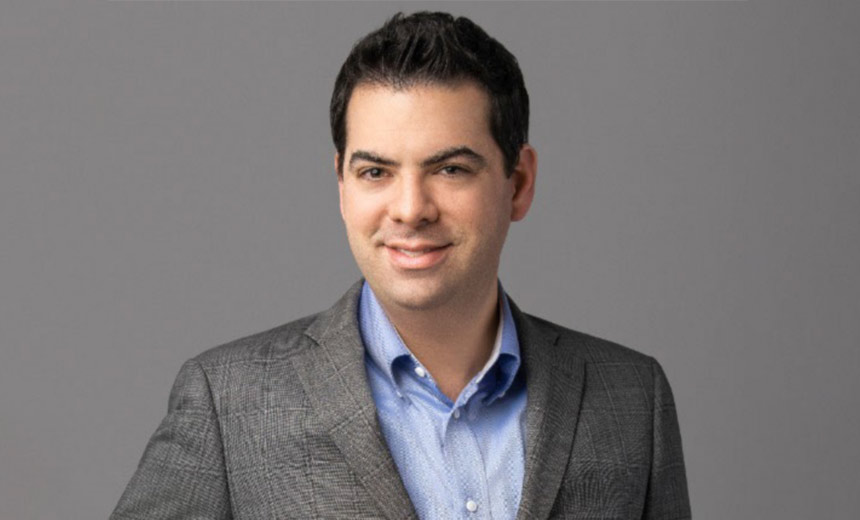
CrowdStrike plans to purchase a continuous identity startup led by a former Google product manager to provide dynamic, real-time and artificial intelligence-driven access orchestration.
See Also: AI Browsers: the New Trojan Horse?
The Austin, Texas-based platform security goliath said Silicon Valley-based SGNL’s take on continuous, real-time access control is essential in an era increasingly defined by AI agents and machine identities, said Chief Business Officer Daniel Bernard. SGNL’s capabilities in granting and revoking access to AI agents and machine identities based on real-time intelligence were unmatched in the market, he said.
“This whole notion of continuous and real-time access is new,” Bernard told Information Security Media Group. “You didn’t see other people doing what SGNL was doing. Being able to grant access and privilege immediately and take it away immediately based on intelligence, that’s something that really resonates with us and resonates with our customers, and also will resonate with our ecosystem as well.”
SGNL, founded in 2021, employs 59 people and has raised $42 million in two rounds of outside funding, having most recently completed a $30 million Series A funding round in February 2025 led by Brightmind Partners. The company has been led since its inception by Scott Kriz, who spent four years as a Google identity and authorization product manager. CNBC said CrowdStrike will pay $740 million for SGNL (see: CrowdStrike Buys Pangea for $260M to Guard Enterprise AI Use).
What Makes SGNL Different Than Traditional Identity Tools
Unlike traditional identity tools that rely on static provisioning and batch updates, SGNL brings dynamic, intelligent access controls that can both grant and revoke privileges immediately based on context and threat intelligence, Bernard said. The deal was born out of a market need for real-time identity control that transcends the limitations of static policy-based systems, he said.
“Philosophically, all the legacy approaches are really built on what I would call standing privilege, where you have access to whatever the asset is because of your standing, your job title or your group membership, versus this whole concept of zero standing privilege. That’s a term that the folks at SGNL created – ZSP – where you have no access until a specific business need arises,” Bernard said.
Most legacy identity and access systems operate under the assumption that users need constant access to a wide array of systems, which Bernard said introduces unnecessary security risks. SGNL’s zero standing privilege model enables organizations to minimize risk exposure, prevent privilege creep and dramatically reduce the attack surface for identity-based threats, Bernard said.
“If a threat is detected, SGNL is able to revoke access autonomously in milliseconds,” Bernard said.
In traditional identity systems, Bernard said access management centered on human users and their static permissions across networks or cloud applications. But now, identity must encompass humans, machines and contextual access decisions, with organizations needing a centralized control plane to grant and revoke privileges dynamically based on real-time data and events, he said.
“Identity before was humans in various network configurations having access to pieces of software, whether that be on-prem or the cloud,” Bernard said. “Now, it’s not just identity of humans and non-humans, it’s what do they have access to, and when do they have access to these various things? This is totally an agentic problem that needs to be solved with the right agentic technology for tomorrow.”
How SGNL Aligns With CrowdStrike’s Single-Platform Strategy
Traditional systems were built to handle human employees with set onboarding and offboarding cycles and predictable access needs, Bernard said. But AI agents require high-speed provisioning, flexible privilege assignment and ephemeral access, sometimes operating for mere seconds before they complete a task and vanish. Traditional systems struggle with this pace and scale, Bernard said.
“The speed of technology is just accelerating the need for the agentic workforce, the power of the agentic workforce, but also the complexity around onboarding, offboarding, securing and having visibility of the agentic workforce,” Bernard said. “That’s why having this kind of real time, continuous access, trust and privilege technology is mission critical.”
Many other identity tools are on premises, outdated and difficult to fully integrate into modern cloud-delivered security platforms, but Bernard said SGNL is cloud-native and AI-first, making it immediately compatible with CrowdStrike’s single-platform strategy. Having all modules interoperate within the same control plane allows for faster integration, meaning customers will benefit from SGNL sooner.
“We don’t do bolt-on acquisitions,” Bernard said. “We need ones that we can natively integrate to provide that promise that we stand by, which is single agent and single platform. We saw this as something we could integrate very quickly, which is very important for us. It’s the right technology for tomorrow, versus buying a bunch of technology that maybe was right for another time.”
Bernard drew a contrast between CrowdStrike’s AI-first approach and what he characterized as Palo Alto Network’s rearview mirror strategy, acquiring older technologies like CyberArk for a different kind of identity problem. Relying on multiple platforms or acquisitions with conflicting architectures leads to many sources of truth, which ultimately erodes both security and operational effice, Bernard said.
“Some companies are looking at the windshield, which is what we’re doing, and others are looking in the rearview mirror,” Bernard said. “Taking technology that was built in a very different time to solve a very different problem isn’t necessarily the right way to do that. When you have many sources of truth, you don’t have truth.”