

Critical Infrastructure Security
,
Information Sharing
,
Next-Generation Technologies & Secure Development
Officials Warn Funding Cuts, Fragmented Intelligence Sharing Slow Threat Response
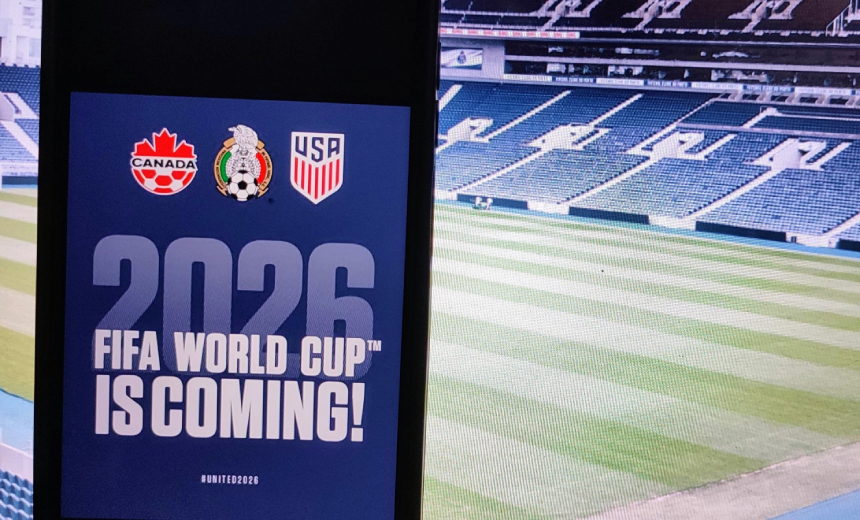
Senior state and local security leaders preparing for the 2026 FIFA World Cup and other high-profile U.S. events told lawmakers Tuesday that fragmented intelligence pipelines, growing cyber risks and major reductions in federal grants are straining the nation’s major-event security framework.
See Also: Sandboxing Case Study: Old vs. New Technologies
A panel of experts warned the House Homeland Security committee Tuesday during a hearing titled “Before the Whistle: Assessing Information Sharing and Security Collaboration Ahead of Major Events” that the country is entering one of its busiest international event cycles in decades at a moment of funding instability, escalating cyberthreats and persistent interoperability gaps. The hearing focused largely on the 2026 FIFA World Cup, which will span multiple U.S. host cities, in addition to the America 250 celebrations and the 2028 Summer Olympics.
Officials detailed how many of the upcoming events are not confined to stadium security and often require multi-week, multi-jurisdiction operations that depend on continuous information sharing and protection of critical infrastructure, including power, transportation and communications networks.
But uncertainty surrounding key federal preparedness programs, including the Urban Area Security initiative and the State Homeland Security Grant program, has also intensified competition for resources that historically fund interoperable communications, cyber intelligence capabilities and the regional fusion centers that underpin information sharing during major events.
“Cyberthreats may represent the greatest vulnerability surrounding major events because adversaries do not necessarily need physical proximity to cause harm,” Mike Sena, president of the National Fusion Center Association, told lawmakers. He also warned that a successful cyberattack during an upcoming event targeting power, water, communications or transportation systems “could create cascading effects that overwhelm response capabilities.”
Officials also warned there is still no fully integrated national framework for state and local cyberthreat response, even as digital infrastructure has become inseparable from physical event security. Fusion centers often lack timely access to actionable cyberthreat indicators and advanced cyber analyst training, which then limits their ability to provide real-time warnings to frontline agencies.
The panel told lawmakers that the worsening fragmentation extends to technology platforms. Federal systems used by the Homeland Security department and FBI are not fully interoperable with state and local systems, they said, forcing analysts to at times work from partial datasets during compressed timelines. During fast-moving incidents, the witnesses said those issues can slow coordinated response across jurisdictions.
Travis Nelson, Homeland Security advisor to Maryland Gov. Wes Moore, pointed to recent international incidents, including international railway disruptions and suspected network attacks during recent Olympics games, as evidence that cyber and infrastructure threats are no longer theoretical (see: How the Paris Olympics Survived Unprecedented Cyberthreats).
He also warned that steep reductions in FEMA-administered preparedness grants are forcing states to scale back personnel and capabilities that support both cyber and physical event security.
“Information sharing is one of the most basic and fundamental services the federal government can provide to states to enhance preparedness,” Nelson said, noting how the State Homeland Security Grant program lost over $1.3 million between federal fiscal year 2024 and 2025, in addition to sweeping cuts across the State Homeland Security Grant Program, Emergency Management Preparedness Grant and Urban Area Security Initiative.
Nelson said “the sudden reduction of federal funds” has left states like Maryland “very vulnerable” and faced with no option but to reduce personnel and capabilities.
Joseph Mabin, deputy chief of the Kansas City Missouri Police Department, said his region’s World Cup footprint will span at least 10 counties across two states, which will ultimately require significantly enhanced cybersecurity and intelligence. The event will require the largest mutual aid deployment in the city’s history and depends on sustained federal-local partnerships that fund interoperable systems and real-time situational awareness, he said.
Ray Martinez, chief operating officer of the Miami World Cup 2026 Host Committee, recommended layered planning that integrates federal intelligence briefings, joint operations centers and cybersecurity coordination into broader public safety operations. Exercises conducted ahead of the tournament have tested cyber disruption scenarios alongside physical security threats, he said.
Witnesses described the World Cup and other upcoming events as a stress test of the nation’s post-9/11 information-sharing architecture and its cyber resilience. Without predictable funding, interoperable systems and timely intelligence access, they warned that information may not move as quickly as the hybrid threats targeting critical infrastructure.