

Cyberwarfare / Nation-State Attacks
,
Fraud Management & Cybercrime
,
Government
New Handala Site Is Also Available
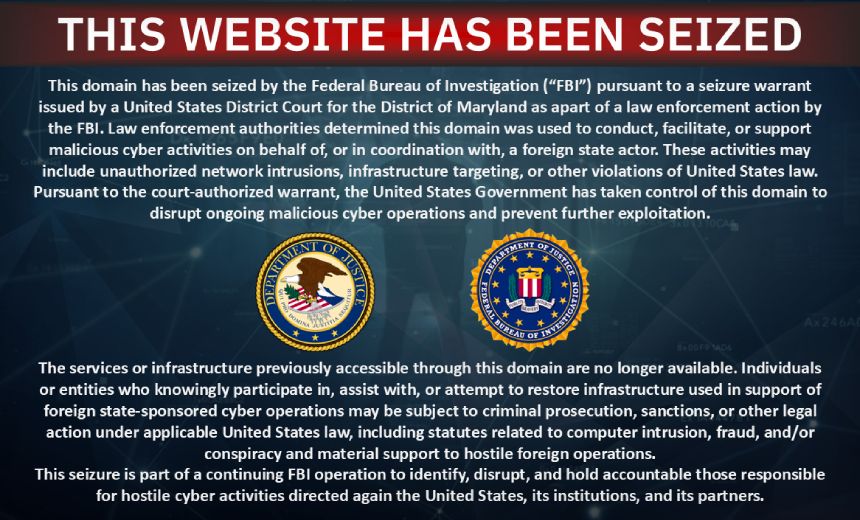
U.S. federal agents seized four web domains associated with Iranian hacking operations days after a threat actor going by Handala posted screenshots it said came from inside the IT systems of medical device manufacturer Stryker.
See Also: New Attacks. Skyrocketing Costs. The True Cost of a Security Breach.
Handala – widely suspected of being a front for Iranian intelligence – broke into the medical device maker’s Active Directory on March 11, leading to a disruption in ordering and shipping that still persists (see: Health Sector Braces for Stryker Hack Supply Chain Shock).
It posted onto handala-hack.to evidence of the hack and asserted that it deleted 12 petabytes from Stryker systems. Now, the website displays a seizure notice left by the FBI and the Department of Justice.
Federal authorities additionally seized three other domains used by Iranian intelligence in hack-and-leak operations or to make threats justicehomeland.org, handala-redwanted.to.
They were able to seize the domains because the registrars used to create them, Public Interest Registry and Namecheap, are located in the United States.
Iran “used the seized domains to dox and harass dissidents and journalists, incite violence against Jewish communities and spread Tehran’s anti-American propaganda,” said Assistant Attorney General for National Security John A. Eisenberg.
Since the United States and Israel began a protracted bombing campaign against Iran on Feb. 28, Handala has been especially active, posting what it said were 100,000 emails of a former Israeli intelligence agent now at a think tank, subscribers to the Telegram channel belonging to a pseudonymous Iranian netizen and the putative identities of senior Israeli military officers. It posted what it says was 851 gigabytes of confidential data from members of the Sanzer Hasidic Jewish community.
Handala sent death threats to Iranian dissidents and journalists, telling two in a March 1 email that it shared their names and home addresses with “our partners,” the Jalisco New Generation Cartel, a Mexican transnational criminal organization.
The Stryker hack did not affect individual medical devices, but the FBI in an affidavit said that some hospitals in Maryland on March 11 responded to the attack by switching away from Stryker equipment – it makes hands-free communications systems – to rely on radio and verbal exchanges. The Stryker attack “in some cases interfered with the delivery of emergency medical care in Maryland hospitals,” the affidavit states.
One of the disrupted domains justicehomeland.org, figured heavily in a 2022 attack against Albania’s online service portal for citizens. The site published documents that appeared to belong to the Albanian government and residential permits that appeared to belong to members of an Iranian opposition group living in Albania, the Mojahedin-e-Khalq (see: US Sanctions Iranian Spooks for Albania Cyberattack).
Content from the seized domains is still available through archive.today, a site of uncertain ownership that allows users to save copies of websites. A new Handala website apparently appeared online late Thursday. The registrar used to create it is the government of the Kingdom of Tonga, a Polynesian island country that offers /to country code top-level domains. “The voice of Handala will never be silenced,” the site asserts.
FBI Director Kash Patel vowed that the United States is “not done” with fighting Handala.