

Artificial Intelligence & Machine Learning
,
Healthcare
,
Industry Specific
Plan Aims to Modernize Workflow, Expand AI Use Across Agencies, Improve Cyber
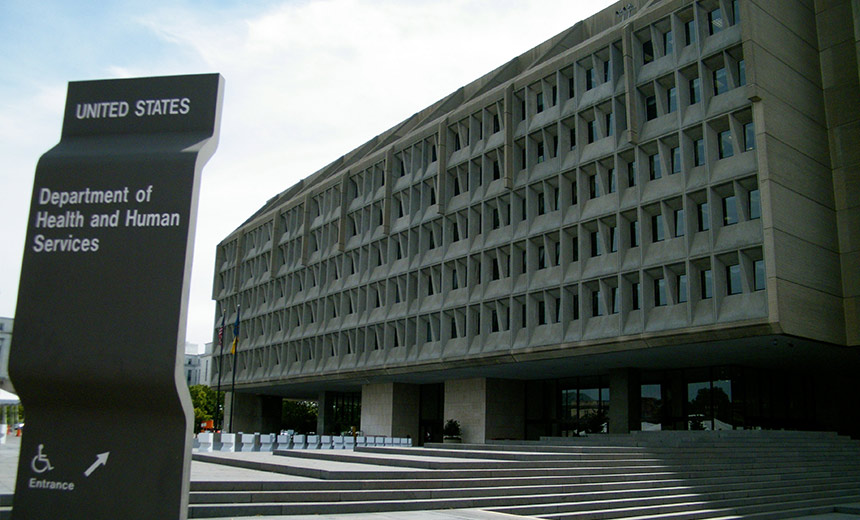
The U.S. Department of Health and Human Services on Thursday unveiled “version 1” of a strategic plan to implement artificial intelligence as a “practical layer” across the department and its agencies aimed at helping to break down silos, improve collaboration and increase efficiencies.
See Also: Maximizing data utility in mission delivery, citizen services, and education
HHS said the first version of its plan focuses on the use of AI “primarily on improving internal operations, efficiency and federal use,” but the longer-term vision is to “pave the way for engagement with private sector stakeholders to co-create solutions that maximize the potential of AI.”
The so-called “OneHHS” approach seeks to involve all HHS divisions – including the Centers for Disease Control and Prevention, the Centers for Medicare and Medicaid Services, the Food and Drug Administration, the National Institutes of Health and others “to collaborate in the development of one robust department-wide AI infrastructure, streamlining workflows and enhancing cybersecurity,” HHS said in a statement.
The strategy reflects a push to break down silos within HHS divisions – including research, regulation, healthcare delivery and human services – by enabling greater collaboration under the unified OneHHS approach.
“By establishing AI-enabling infrastructure we are streamlining processes and reducing inefficiencies,” said Clark Minor, HHS CIO and acting chief AI officer in the document. “In parallel, we are training our workforce to use AI at all levels, to update workflows and automate tedious tasks,” he said.
HHS’ plan to use AI to improve efficiencies across departments and its agencies also comes in the wake of a major restructuring earlier this year by HHS Secretary Robert F. Kennedy Jr. which reduced HHS’ headcount by about 20,000 people through early retirement offers and layoffs to a current level of about 62,000 employees (see: RFK Jr. Cuts at HHS Affect HIPAA, Cyber Response Units).
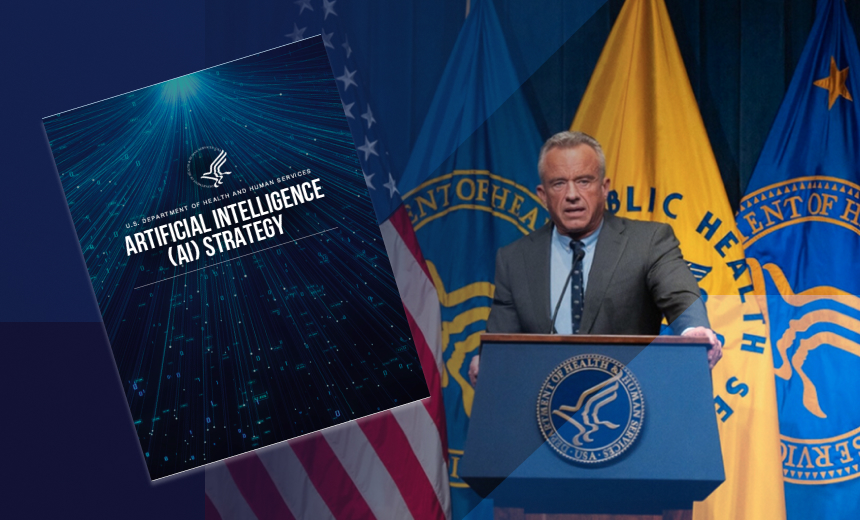
In fiscal 2024, HHS had 271 active or planned implementations of AI, the strategic document said. Under the plan, HHS expects utilization of tools to continue to grow, with estimates of new use cases to increase by about 70% in fiscal year 2025 based on annual inventory currently in development.
Following on the heels of Trump’s action plan for AI, HHS made ChatGPT “available to everyone in the department,” according the HHS’ strategic AI document. “We led the federal government in this effort, but this is just the beginning,” said Jim O’Neill, deputy secretary for HHS in a statement.
Five Pillars
HHS said its AI strategy is built upon five pillars, which will be reassessed and updated as necessary “to optimize AI technologies’ impact across the department.”
The five pillars include:
- Ensuring governance and risk management for public trust: This includes developing a “nimble” AI governance system that fosters innovations “while maintaining a strong check on potential misuses, breaches or failures to mitigate risk;
- Design infrastructure and platforms for user needs: That includes utilizing shared, reusable computing, data, model-hosting, testing platforms to enable different divisions to leverage AI without duplicating effort;
- Promote workforce development and burden reduction for efficiency: That includes equipping HHS employees with AI tools and training to perform their work more efficiently and reduce administrative burden;
- Foster health research and reproducibility through “gold standard” science, including using AI to accelerate biomedical research, drug and biologics approvals, and other scientific work while embedding “rigorous scientific standards” and reproducibility;
- Enable care and public health delivery modernization for better outcomes, including increasing the use of AI to help obtain measurable improvements in both population health and individual patient outcomes.
As part of the effort, HHS said it has established an AI governance board that includes senior leaders from various department divisions. “This board is expected to meet at least twice per year and will, as necessary, confer further across divisions on a more frequent basis on matters pertaining to IT policy, cybersecurity, data governance and procurement,” HHS said.
HHS’ AI strategy follows an executive order by President Donald Trump issued shortly after he took office in January, issuing “an AI action plan” (see: Trump Reorders Federal AI Policy).
Since then, the Trump administration has begun fleshing out its AI vision, including issuing a strategic plan in July laying out a vision aimed at ensuring the U.S. is a global AI leader (see: Trump’s AI Plan Sparks Industry Praise and Warnings of Risks).
HHS did not immediately respond to Information Security Media Group’s request for additional details about its strategic AI plan, including specifics about how the department envisions it to potentially improve HHS cybersecurity.