

Artificial Intelligence & Machine Learning
,
Next-Generation Technologies & Secure Development
AI, Robotics Leaders Warn Chinese Robots Could Disrupt Sensitive Operations
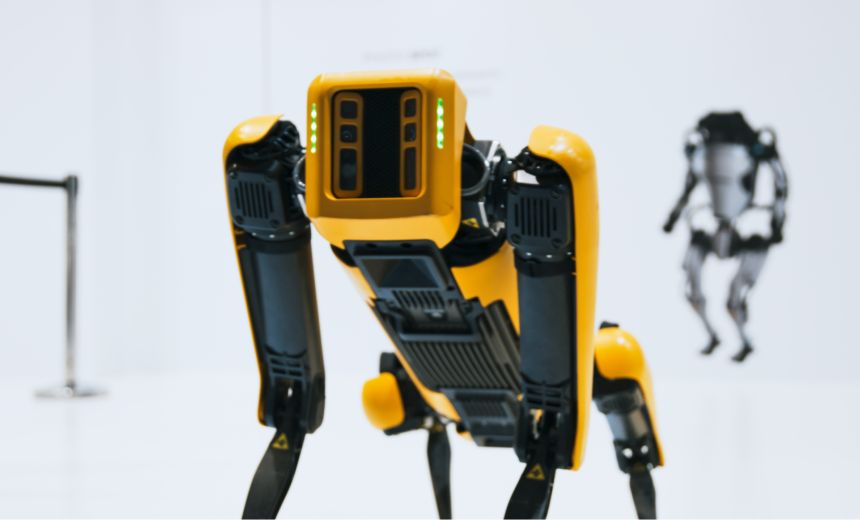
Artificial intelligence and robotics leaders warned U.S. lawmakers Tuesday that Chinese-developed robots combine data collection, network connectivity and real-world operation in ways that could enable intrusions far beyond traditional cyberattacks, opening the door to surveillance, operational disruption and even physical harm.
See Also: AI Is Transforming the Chief Data Officer Role
The warnings came during a House Homeland Security subcommittee hearing examining the national security risks posed by AI-enabled robotics platforms developed by companies tied to mainland China. Industry representatives told lawmakers that the scale of AI-enabled robotics deployments are accelerating across sectors including logistics, manufacturing, energy and public safety – placing potentially vulnerable systems in environments that are both operationally sensitive and economically critical.
Beijing has invested heavily in recent years in AI robotics development while rolling out a coordinated industrial strategy that blends national planning, subsidies and military-civil collaboration to accelerate both domestic deployment and global market share (see: China Is Outpacing US in Critical Tech Research Investments).
Panel witnesses pointed to initiatives such as “Made in China 2025,” multibillion-dollar state investment funds and targeted support for domestic robotics firms as evidence of a long-term effort to dominate the hardware and data layers of emerging AI systems.
“The PRC is deliberately flooding the global market with artificially cheap, subsidized robotic platforms,” said Michael Robbins, CEO of the Association for Uncrewed Vehicle Systems International, an industry association. “This concerted national effort aims to hollow out the U.S. robotics industrial base, creating entrenched technological and industrial dependency while embedding structural cyber-physical vulnerabilities across our critical infrastructure.”
Witnesses described three core areas of concern: the exposure of sensitive data collected by robotics systems, the potential for remote access or manipulation and the persistence of access through software updates and cloud-based management tools. Because many platforms rely on ongoing connectivity, they warned that those risks can often persist throughout the entire lifecycle of the system.
Matthew Malchano, vice president of software for Boston Dynamics, said the use of foreign advanced robotics technology in critical sectors “creates a risk of interference, access and denial of service.”
“Just in the past few months, we have seen Chinese-made quadrupeds exhibited during China’s military parade, and videos of Chinese humanoids training to fight in hand-to-hand combat,” he added. “To win the AI race, the United States must win the robotics race.”
Witnesses said risks associated with AI-enabled robotics are amplified by the way modern robotics systems operate as fully connected platforms – continuously collecting environmental data, transmitting information across networks and, in many cases, relying on remote diagnostics and over-the-air updates to maintain functionality. That combination of connectivity and autonomy expands the attack surface and creates potential pathways for unauthorized access or control.
The panel told lawmakers that decoupling foreign-developed robotics from U.S. supply chains and critical infrastructure sectors could take time but would be crucial to bolstering protections for sensitive systems. Experts have previously warned that compromised robotics systems could introduce real-world consequences, from the disruption of industrial operations and interference with safety systems, to harmful outcomes in surgical procedures (see: Evolving Threats Facing Robotic and Other Medical Gear).
“The United States is chasing technological superiority, whereas China is looking to win on implementation and diffusion of its technology across the world,” Max Fenkell, global head of policy and government relations for Scale AI, told lawmakers. “Without a stronger focus on implementation and deployment, the United States risks falling behind and never catching up.”
“China is now the dominant force in industrial robotics by most measures,” said Rush Doshi, assistant professor of security studies at Georgetown University, noting how Beijing now accounts for the majority of global AI-driven robotics patent filings. Doshi urged lawmakers to pass legislation prohibiting federal agencies and federal contractors from procuring robotic systems or AI models developed by companies subject to PRC national security laws.
“Currently, the U.S. government actually treats some American companies, notably Anthropic, with greater scrutiny than PRC AI companies,” he added (see: Anthropic Seeks Court Stay of Pentagon Risk Designation).