

Application Security
,
Artificial Intelligence & Machine Learning
,
Next-Generation Technologies & Secure Development
Enterprises Seek Multi-Agent Systems to Govern LLM-Generated Code at Scale
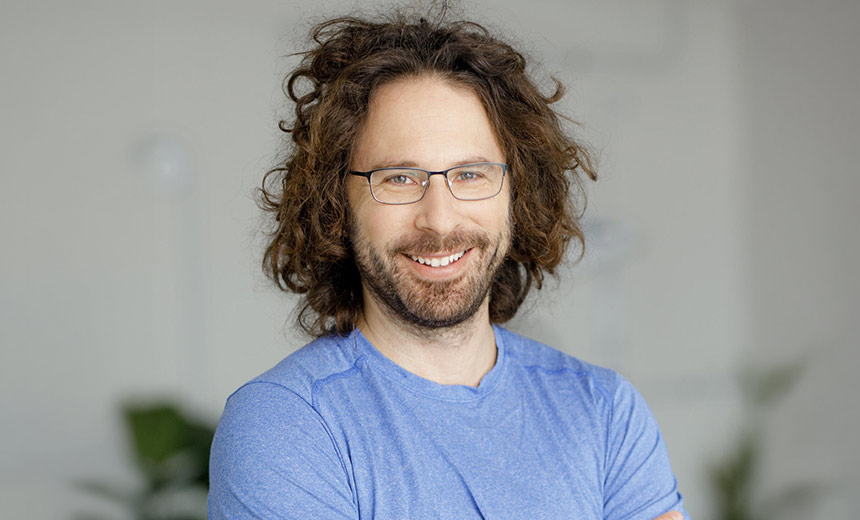
A code review and governance startup founded by an ex-Alibaba leader raised $70 million to ensure code is correct, secure and aligned with organizational standards.
See Also: AI-Based Coding Redefines Software Development
The Qumra Capital-led Series B funding round will help New York-based Qodo ensure that software is reliable, secure and compliant with internal and external standards to help organizations avoid outages, security flaws or compliance failures, said co-founder and CEO Itamar Friedman. He said Qodo can handle edge cases, maintain system stability and avoid outages that damage revenue and reputation.
“When you’re talking about real-world software development, you have to deal with everything underneath the glacier, under the water, under the surface, which is maintainability, review, compliance, security,” Friedman told ISMG. “All that is super critical.”
Qodo, founded in 2022, employs 123 people and has raised $120 million, having last completed a $40 million Series A round in September 2024 led by Susa Ventures and Square Peg. The company has been led since its inception by Friedman, who previously spent four years at Alibaba, including a three-year stint as the Chinese e-commerce giant’s director of machine vision.
How Governance Tools Can Question and Validate Coding Intent
Systems can generate thousands of lines of code in minutes, but Friedman said that introduces new vulnerabilities, with organizations realizing that without strong governance, faster development simply leads to faster failure. In this context, he said governance ensures that code aligns with architectural standards, meets performance expectations and adheres to organizational policies and values.
“It’s becoming in 2026 very clear that code generation is not enough,” Friedman said. “LLMs are not enough. They’re enablers. They’re the why now, but they’re not sufficient.”
Artificial intelligence-generated code introduces a problem around verifying what has been created is correct, safe and aligned with expectations. While coding tools aim to satisfy developer intent, Friedman said governance tools must question and validate that intent. This requires advanced AI models, fine-tuning techniques and large-scale infrastructure capable of analyzing code continuously across entire organizations.
“Have you ever seen a code generation tool like Claude Code tell you, ‘Oh, sorry, I can’t do this for you,'” Friedman said. “All it tries to do is please the developer, complete a task for the developer. Code quality and code governance is the opposite of that. How do we verify that what was developed is good, and stop you when it’s not?”
Instead of relying on human reviewers or a single AI model, Friedman said Qodo deploys multiple specialized agents to evaluate each code change. Each agent in the swarm performs specialized verification tasks, collectively assessing whether code meets defined standards. This includes checking for correctness, security vulnerabilities, performance issues and adherence to best practices, he said.
“Quality is subjective,” Friedman said. “LLMs are coming with their desire to appeal, ‘I want to make my developer happy with whatever he is asking me, and just taking the average response and spinning it.’ Qodo is there to protect and actually verify that code, that the standards and best practices are met.”
How LLMs Benefit From Having Qodo Operate Alongside It
Code quality is inherently subjective, and what constitutes good code varies between organizations based on their standards, risk tolerance and operational requirements. To address this, Qodo learns from each organization’s internal data, including codebases, developer discussions and tools such as Slack. This helps the firm tailor its evaluations to the specific context in which code is being developed.
“Qodo is building the second brain,” Friedman said. “It’s building the system of record that is objective. There’s more and more advancements and releases that you should see from Qodo about that.”
Traditional coding agents operate in a stateless manner, meaning they don’t retain knowledge between interactions, which limits their ability to learn from past decisions or maintain consistency over time. Qodo aims to solve this by building a persistent memory layer that captures patterns, rules and insights from across the organization, which enables the system to make more informed decisions, he said.
“We released the most advanced multi-agent system,” Friedman said. “It reaches top one or top performer on code review benchmarks in a really efficient way. And also it is the first system that turns quality into what it really is, which is subjective.”
Coding agents are designed to deliver results, not to question whether those results are correct or appropriate. Qodo’s role is to introduce guardrails that counterbalance this tendency. Rather than replacing LLMs, it operates alongside them, enforcing rules and policies that ensure outputs meet required standards. This includes identifying when code deviates from best practices or introduces risk.
“You need to write the code, and then you do review and testing,” Friedman said. “And right now, what’s happening is this is shrinking, shrinking, shrinking.”