

Agentic AI
,
Identity & Access Management
,
Security Operations
KKR-Led Series B Investment Propels AI Agent, Nonhuman Identity Management Push
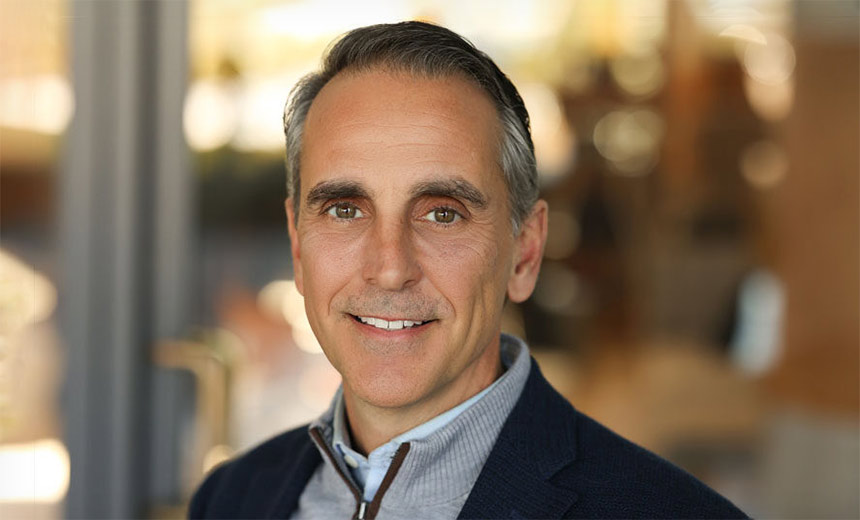
An identity security stalwart led by the company’s longtime founder raised $700 million to support the management of non-human identities and agentic artificial intelligence.
See Also: A CISO’s Perspective on Scaling GenAI Securely
Los Angeles-based Saviynt plans to use the Series B proceeds to invest in core platform capabilities, AI governance protocols and deep integrations with the likes of AWS, Google and CrowdStrike, said Saviynt President Paul Zolfaghari. What was once about on premise human access is now a multidimensional challenge involving extended workforces, robotic accounts and AI-driven agents, Zolfaghari said.
“It was an opportunity to put in place the resources necessary to deliver on the vision for the future. The interest in identity security and AI has gone up quite a bit,” he said. “The amount is just a function of the resources that we think that we need for the foreseeable future. It’s an opportunity for us to have the resources we need while still maintaining the control and the culture that has gotten us to this point.”
Saviynt, founded in 2010, employs nearly 1,400 people and has now raised nearly $1.04 billion, having last received $205 million in financing in January 2023 from an affiliate of AllianceBernstein. Founder Sachin Nayyar served as CEO of both Saviynt and Securonix from 2010 to January 2018, left Saviynt in 2018 to solely lead Securonix, then left Securonix and returned as Saviynt’s CEO in 2023 (see: The Evolution of Identity Defense: Saviynt’s Vision for 2025).
What KKR Brings to the Table as Lead Investor
Since joining Saviynt in 2018, Zolfaghari has seen a clear shift in enterprise understanding of the need for modern, cloud-native identity security platforms. The KKR-led Series B round values Saviynt at $3 billion and is structured as a minority investment, which means that while the capital infusion is substantial, the company retains control in the hands of its existing shareholders, Zolfaghari said.
“We felt like now is the perfect time to do it, because the interest in identity security has been growing pretty extensively,” Zolfaghari said. “We had a lot of momentum coming into this year. This gives us the resources to really execute on the vision going forward. So, the timing of it was an opportunity, really, to put in place the resources necessary to deliver on the vision for the future, and so perfect time to do it.”
KKR is one of the world’s most sophisticated and successful technology and cybersecurity investors, and he said their participation is the result of a deep, independent analysis of the market and Saviynt’s position within it. KKR brings significant operational expertise, global reach and credibility to the table, which Zolfaghari said will support Saviynt in expanding into new markets and refining execution at scale.
“KKR is an extremely, routinely sophisticated investor and what that means is that their willingness to partner with Saviynt is indicative of their own analysis, their own research, their own evaluation of this market and the opportunity for the market,” Zolfaghari told Information Security Media Group. “This is a very, very strong endorsement of what we’ve done and where we’re going.”
Today’s CIOs and CISOs must consider not just internal staff, but entire ecosystems of brokers, dealers, franchisees and gig workers, as well as an increasing number of non-human entities. These include robotic process automation accounts, service accounts, and now, agentic AI systems capable of learning, evolving and interacting autonomously. This shift introduces greater complexity and urgency, he said.
“The problem that companies are trying to solve is one in which the legacy architectures are just completely ill-suited for,” Zolfaghari said. “This is really causing what we think is a huge sense of urgency with a lot of companies to readdress and reestablish their platform for the future.”
Key Differences Between Securing AI Agents, Human Identities
Unlike humans who hold relatively stable roles, AI agents are contextually aware, self-learning and constantly evolving, which presents a unique security challenge around enforcing access controls for an identity that is changing its role and privileges in near real time. He said Saviynt is investing heavily in protocols, connectors and governance models that allow agentic AI to be treated like any other identity.
“The agent itself is going to evolve in terms of its capabilities and what it has access to, and it’s going to do that in a way that is demonstrably more advanced and more contextually aware than people,” he said. “The problem that has to be solved with this is much more complicated. How do we manage it to make sure that the access and the controls are consistent with the company access and controls?”
Saviynt’s platform is entirely cloud-native and organically developed, meaning every line of code was written in house, which Zolfaghari said ensures greater agility and control in how the it evolves. The company is investing heavily in enhancing the core platform, building capabilities that support emerging identity types and integrating with critical players like AWS, CrowdStrike, Wiz and Zscaler, he said.
“A lot of the investment is going to go in making sure that we maintain and build market leadership around non-human identities, and specifically around an advanced solution around managing agentic AI and AI agents,” Zolfaghari said. “The area that’s going to require a lot of increased investment is around agentic AI and AI agents, because that’s a new use case for the market.”
While revenue growth is important, Zolfaghari said what truly defines success is customer loyalty and platform adoption, with the company boasting a 96% gross revenue retention rate. In identity security, renewals, references, adoption and even innovation flow from deep customer engagement. As Saviynt continues to grow, Zolfaghari said this focus on customer centricity will remain its guiding principle.
“Our number one metric, without question, is our customer satisfaction metric,” Zolfaghari said. “We have already today the market-leading gross revenue retention, and it’s at 96%. We believe very strongly in this industry in particular, everything good comes from customers fully deploying and utilizing your platform.”