

Acquisition Streamlines Security Operations From Asset Discovery to Remediation
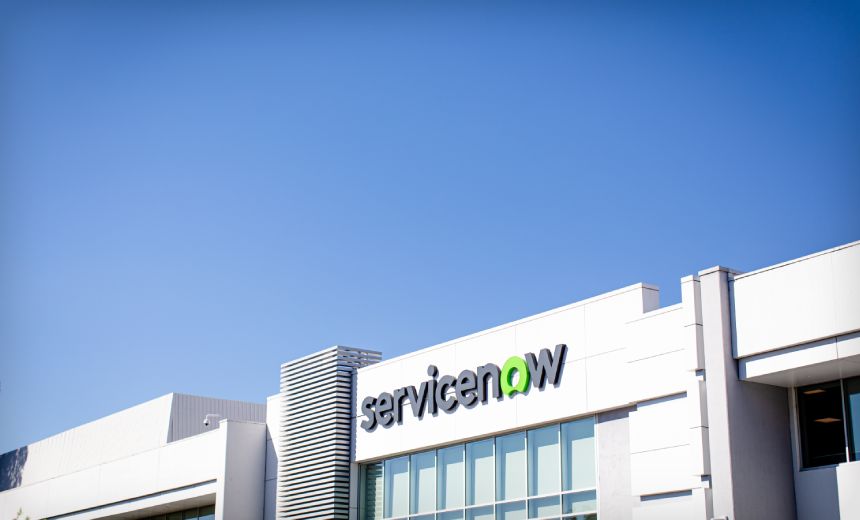
In its largest acquisition to date, artificial intelligence software company ServiceNow has entered into an agreement to buy cyber exposure management and security company Armis for $7.75 billion in cash.
See Also: Going Beyond the Copilot Pilot – A CISO’s Perspective
Armis specializes in real-time visibility and threat detection for unmanaged devices across the network, including IT, operational technology, medical devices and other environments for business, government and critical infrastructure organizations.
The deal will bolster ServiceNow’s cybersecurity offerings at a time when many larger technology vendors are choosing to expand their security portfolios through strategic acquisitions. The company earlier this month announced that it will acquire identity and access security provider Veza for $1 billion.
The Armis acquisition allows ServiceNow to present a broader, more compelling value proposition to CISOs by delivering true end-to-end security use cases, said Pablo Stern, general manager of tech workflows at ServiceNow.
It brings the IT software vendor more firmly into the physical world with Armis’s OT capabilities. Beyond its existing strengths in SOC operations, incident response and workflow-based exposure management, ServiceNow can now address the pre-breach side of security with full exposure management across IT, OT, IoT and medical devices, Stern told Information Security Media Group.
Stern called the integration a “single pane of glass” that will give users insight into risk, compliance, auditing and remediation. “We’ll give you a full closed loop,” he said. “That’s a big part of the value prop with our business.”
ServiceNow plans to support and maintain Armis’s existing business without disruption. After the deal closes, ServiceNow will begin a phased integration roadmap focused on platform and data-layer convergence, enhanced visibility and joint use cases – starting with end-to-end exposure management from detection through remediation across both IT and OT environments.
The companies will expand native integrations, UI and data capabilities, build on their existing integration, and enhance it with AI-driven features. Armis’s team will fully join ServiceNow and operate as an integrated business unit, aligned with ServiceNow’s broader portfolio and leadership structure, he said.
The companies already offer many integrations that connect differentiated data from Armis with ServiceNow’s workflow action.
Once the acquisition is completed, the combined platform will help customers reduce risk across their environments by eliminating fragmentation, according to Armis CEO and founder Yvgeny Dibrov.
“Organizations rely on an increasing number of security tools, each generating alerts, insights and recommendations,” he wrote in a blog post Tuesday. “Without strong integration and operational alignment, this fragmentation makes it difficult to understand what matters most and what actions will have the greatest impact.”
Dibrov wrote that by joining ServiceNow, “We strengthen our ability to help customers move from understanding risk to acting on it. This means tighter alignment between asset intelligence and protection, exposure prioritization and the workflows required to remediate issues and reduce risk at scale.”
Rumors circulated last week that ServiceNow was in talks to acquire Armis, a disclosure that sent the company’s stock sliding.
While Armis had indicated that it was preparing to go public in 2026 or 2027, the company’s $300 million in annual recurring revenue, despite growing 50% year over year, fell short of the expectation that a cyber firm needs $500 million in ARR to consider an IPO.
The company was founded in 2016 and just last month closed a $435 million funding round at a $6.1 billion valuation led by Growth Equity at Goldman Sachs Alternative.
The deal is the third largest cybersecurity acquisition of 2025, behind Google’s $32 billion buy of Wiz and Palo Alto Networks’ $25 billion acquisition of CyberArk. It is expected to close in the second half of 2026.