

Plaintext Emails Trigger Police Probes Into Potential Leaks of State Secrets
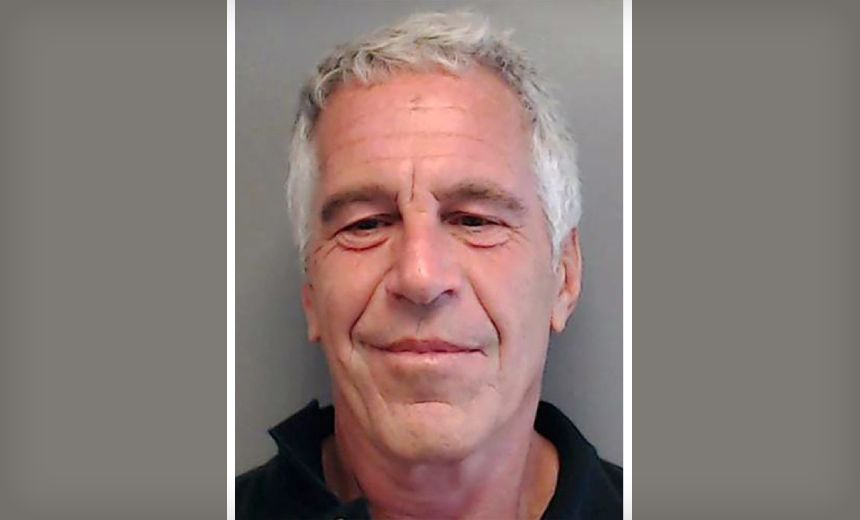
A trove of documents connected to American financier Jeffrey Epstein published by the U.S. Department of Justice show that the rich and powerful who orbited the now-deceased convicted child sex offender practiced horrible operational security.
See Also: On-Demand | NYDFS MFA Compliance: Real-World Solutions for Financial Institutions
The recently released “Epstein files” suggest that King Charles III’s younger brother, formerly known as Prince Andrew, and Peter Mandelson, a cabinet minister in Gordon Brown’s government, separately emailed confidential government documents to Epstein.
It’s “hard to know if it was ignorance or arrogance” that led the men to rely on unencrypted email for sharing confidential information, cybercrime expert Alan Woodward said of the apparent “poor OPSEC.”
“I guess part of the failure here was that they trusted the recipient. Problem number one is that even with modern protections you assume the recipient – and their device – are honest. Epstein clearly wasn’t,” said Woodward, a visiting professor of computer science at England’s University of Surrey.
Why Epstein kept all of the emails now being released, and why he stored them in unencrypted format, are unknown. One potential answer would be to use them as leverage. But an FBI memo from July 2025 said that a “systematic review” of all gathered evidence produced “no incriminating ‘client list,'” as well as “no credible evidence found that Epstein blackmailed prominent individuals as part of his actions.”
What the released files do reveal or suggest – partial redactions sometimes make senders or recipients unclear, although other clues to identity exist – is who remained in his orbit, even after he was convicted of soliciting underage sex in 2008. Whatever the content of their communications, multiple individuals who claimed to have ceased contact with him turned out to still be in touch, sometimes for years after.
The files also appear to reveal that at least two powerful individuals shared confidential government information with Epstein.
These include Peter Mandelson, 72, who served as Britain’s ambassador to the United States in 2025. He was sacked last September owing to revelations that, despite what he claimed, he hadn’t cut contact with Epstein after his 2008 conviction, and also benefited financially from the billionaire. Their communications run to hundreds, if not thousands, of emails.
The files suggest that in 2009 and 2010, when serving as Britain’s business minister, Mandelson leaked to Epstein highly sensitive details pertaining to internal government discussions and bailout activity. This information “could have resulted in commercial benefits to the financier,” reported the group Spotlight on Corruption.
As detailed by Tax Policy Associate’s review of the files, Mandelson appeared to forward directly to Epstein secret reports.
London’s Metropolitan Police is now probing Mandelson’s potential misconduct in office.
Also under investigation, by Thames Valley Police in England: Andrew Mountbatten-Windsor, 65, who served as a British trade envoy from 2001 to 2011. The latest tranche of files released by the DOJ suggest that in 2010, he inappropriately shared confidential government trade reports, including ones pertaining to investment opportunities being managed by British armed forces in Afghanistan, that could have resulted in commercial benefits for Epstein.
Email timestamps suggest the Mountbatten-Windsor, then known as Prince Andrew, forwarded to Epstein verbatim multiple secret reports, sometimes just minutes after receiving them, reported the BBC.
The role of trade envoy, by definition, carries a “duty of confidentiality in relation to information received,” with that information also being under the purview of Britain’s Official Secrets Acts, which is the government’s main protection against espionage and the unauthorized disclosure of information. “If someone is found guilty under the acts, the penalty is likely to be severe,” says a parliamentary overview.
Woodward told me that the OPSEC fails are a reminder that data and metadata often aren’t ephemeral.
“I’m a believer in privacy but you have to use the tools appropriately and be careful who you trust with what. The world is increasingly not private by default especially as artificial intelligence appears,” and especially for anyone who uses an agentic AI assistant tool such as OpenClaw, “which is completely incompatible with E2EE,” he said (see: OpenClaw AI Agent Sparks Global Security Alarm).
Of note too in the investigations of Mandelson and Mountbatten-Windsor is that evidence of their apparent misdeeds came to light roughly 15 years after the alleged crimes occurred.
“I suspect many of those now exposed suffer(ed) from hubris, believing they were above the law. But no one ever is, even if it takes a while to catch up with them,” said Woodward.
Epstein was arrested in 2019 on further charges of sex trafficking minors. He died in jail the same year, ahead of his trial.