

Artificial Intelligence & Machine Learning
,
Government
,
Industry Specific
US President Directs Federal Agencies to Cease Use of AI Firm’s Tech
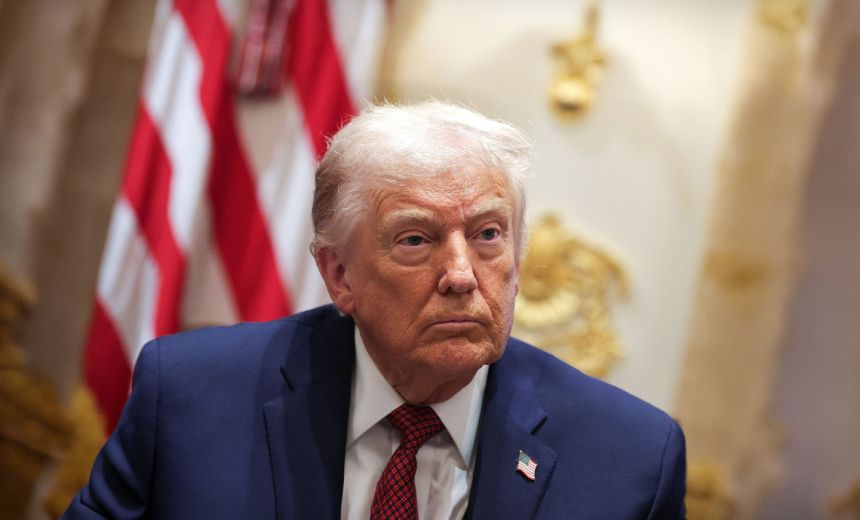
U.S. President Donald Trump directed all federal agencies to end any use of the artificial intelligence developer Anthropic’s popular Claude systems amid an ongoing dispute between the Department of Defense and the AI firm.
See Also: New Trend in Federal Cybersecurity: Streamlining Efficiency with a Holistic IT Approach
“I am directing every federal agency in the United States government to immediately cease all use of Anthropic’s technology,” the president wrote in a Truth Social post. “We don’t need it, we don’t want it and will not do business with them again!”
Defense Secretary Pete Hegseth gave the company a 5:01 p.m. deadline to remove limits on how the military can use its technology, including reported restrictions around domestic surveillance and fully autonomous weapons systems. Anthropic said Thursday it would not alter those safeguards, despite the possibility of being labeled a supply chain risk and effectively banned from defense work (see: Hegseth’s Anthropic Deadline Risks Severe Defense AI Gaps ).
The dispute centers on how Claude – currently the only foundation model approved for use in certain classified Defense environments – can be adapted for military operations. Defense officials have reportedly pushed for broad flexibility across intelligence, cyber and battlefield support functions, while Anthropic wants to preserve restrictions on domestic surveillance and autonomous weapons applications.
Anthropic CEO Dario Amodei, who recently warned publicly about the risks of increasingly powerful AI systems, reiterated the company’s position ahead of the Friday deadline.
“We will not knowingly provide a product that puts America’s warfighters and civilians at risk,” Amodei said in a statement Thursday.
Trump said he “will never allow” what he described as a “radical left, woke company” to dictate how the military conducts warfighting operations. He also accused Anthropic of attempting to “strong-arm” the Pentagon into following its terms of service.
The president directed every federal agency to immediately cease use of Anthropic’s technology and implement a six-month phaseout for agencies already deploying its products, including the Pentagon, where Claude has been used at various classification levels. During that transition window, agencies are expected to unwind integrations, identify replacement solutions and ensure continuity of mission systems that currently rely on the model.
Trump warned that Anthropic must be “helpful” during the phaseout period or face further executive action, including potential civil and criminal consequences. It remains unclear what statutory authorities the administration would invoke to enforce such measures, particularly for existing contracts and cloud-based deployments managed by third-party integrators.
The directive significantly escalates a dispute between the firm and the Pentagon that began over restrictions on surveillance and autonomous weapons applications. Analysts have cautioned that a forced separation could trigger cascading supply chain and compliance implications across the defense industrial base, where Claude has become embedded in experimental AI programs supporting cyber, intelligence and acquisition workflows.
It remains unclear whether the Pentagon will immediately formalize a supply chain risk determination, which former officials previously told Information Security Media Group puts the defense industrial base in “uncharted territory,” or pursue alternative contractual remedies in response. Pentagon officials did not immediately respond to a request for comment on what action, if any, would follow the missed deadline.
The Pentagon began reviewing its business ties with Anthropic after weeks of negotiations over acceptable use conditions for Claude in the military’s classified networks. Previous reports indicated that Hegseth was “close” to ending the department’s relationship with the company if no compromise could be reached.
Analysts have described the reported Friday deadline as unrealistic given the technical, legal and ethical stakes involved. Kevin E. Greene, former program manager in the Department of Homeland Security’s Science and Technology Directorate, warned that severing ties could create a six-month to one-year capability gap while competitors attempt to match existing integration and mission deployments.
Officials say Claude has become embedded in pilot and early production programs supporting software engineering, acquisition analysis and internal workflow automation across defense contractors and military offices. It remains unclear what impact the designation of a supply chain risk could have on Anthropic, though experts warn of potentially severe downstream business consequences across the defense industrial base.
Similar labels have historically focused on foreign adversarial tech or compromised hardware integrity.