

State Department Project Reportedly Aims To Counter Global Content Moderation Laws
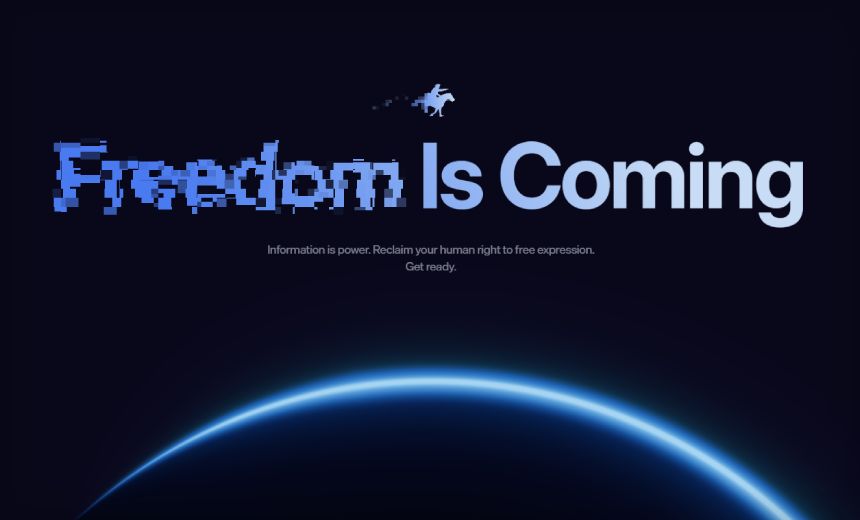
The Trump administration is discussing the launch of an online portal allowing unfettered access to content restricted elsewhere by governments, Reuters reported.
See Also: How 72% of Enterprises Are Rewriting Cyber Resilience Playbooks
The site, freedom.gov, currently displays a holding page announcing that “Information is power. Reclaim your human right to free expression. Get Ready.” The U.S. federal government domain appears not have been in use for more than a decade, although snapshots saved by the Internet Archive show that for roughly three years from 2003 through 2005, it hosted a site dedicated to the U.S. “Victory in Iraq.”
Reuters reported the administration sees the site as a counter to what it perceives as a stifling of conservative voices, particularly in Europe and Brazil. European bans on content such as hate speech and terrorist propaganda. Brazil in 2025 approved a law banning access by minors to sites hosting gambling or pornography.
The Trump administration has chaffed, in particular, at the European Digital Services Act, which governs how platforms handle illegal content. “The EU should be supporting free speech not attacking American companies over garbage,” U.S. Vice President JD Vance posted late last December a day ahead of the European Commission announcing a 120 million euro fine – slightly more than $140 million over DSA violations relating to transparency and the deceptive nature of X’s blue-check account verification system. Europe has continued to probe social media networks for over issues, including publication of non-consensual intimate and sexualized imagery of real people (see: Elon Musk’s AI Bot Snared in New Irish, European Probes).
The project is reportedly headed by Department of State Undersecretary for Public Diplomacy Sarah Rogers. The administration intended to unveil the site during the Munich Security Conference, which took place earlier this month, but delayed after departmental lawyers raised concerns, sources told Reuters. The White House and State Department did not immediately respond to requests for comment, but a State spokesperson contested Reuters reporting that legal concerns delayed the rollout, the news wire reported.
One source told Reuters that freedom.gov may feature a virtual private network to make user traffic appear as if it originated inside the United States. A VPN encrypts a user’s internet traffic, rerouting it through an intermediary server and masking the original IP address with one tied to a host network. The effect is to make a person browsing from a restricted country appear as if they are connecting from an entirely different jurisdiction.
It remains unclear when the platform will be launched and how the administration plans to secure the new system from potential attacks or breaches from foreign actors.
With reporting by Information Security Media Group’s David Perera in Northern Virginia.