

Cybercrime
,
Fraud Management & Cybercrime
,
Government
Trump Signs Executive Order and Publishes Cyberspace Strategy
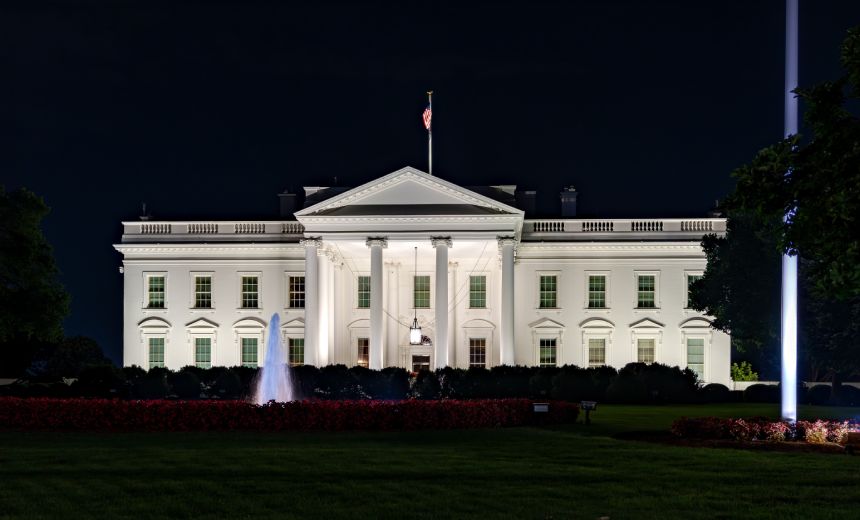
U.S. President Donald Trump on Friday signed an executive order directing federal prosecutors, cyber defense officials and diplomats to ramp up efforts to combat cybercriminal gangs.
See Also: New Attacks. Skyrocketing Costs. The True Cost of a Security Breach.
The order pledges action in dismantling transnational criminal organizations behind scam centers. Romance scams using trafficked and forced workers to perpetuate romance scams run mainly from compounds in Southeast Asia have earned cybercrime bosses tens of billions of dollars per year (see: Breach Roundup: Cambodia Scam Center Crackdown).
The order directs the Attorney General to prioritize prosecutions of cyber-enabled fraud and scam schemes, the homeland security secretary to buttress state and local resilience against cyberthreats and the secretary of state to use diplomatic tools such as sanctions, visa restrictions and limits on foreign assistance “on nations that tolerate these predatory schemes,” a White House fact sheet states.
The fact sheet lists the cybercrime activities it wants suppressed as “ransomware attacks, phishing campaigns, financial fraud, sextortion schemes and impersonation scams.” The order establishes a coordination center to lead federal efforts in the disruption of cybercrime, to be guided by an action plan also called for by the order.
Trump signed the order in tandem with publishing a five-page cybersecurity strategy that vows to “uproot criminal infrastructure and deny financial exit and safe haven” and pledging “common sense regulation.”
“We will unleash the private sector by creating incentives to identify and disrupt adversary networks and scale our national capabilities,” the strategy asserts.
The strategy strikes a bellicose tone by asserting that the government will move “swiftly, deliberately and proactively to disable cyberthreats to America.” Not every response to a cyberthreat will occur in cyberspace, the strategy states – an assertion in keeping with the strategy’s aggressive tone but also an element of American cyber policy that has been in place for decades.
Neither the strategy nor the fact sheet mention any country by name, including China and Russia, two cyberspace rivals responsible for a long list of intrusions into the federal government, telecom and other critical infrastructure organizations. That’s a departure from past administration strategies such as the March 2023 Biden administration strategy, which accused those two countries, as well as Iran and North Korea, of threatening U.S. national security.
The strategy is unusually terse for a White House policy document, consisting of half a dozen over-arching goals that are light on the specifics of how to obtain them. It consists mainly of declarations such as, “We will deny our adversaries initial access, and in the event of an incident, we must be able to recover quickly.”
Private sector cybersecurity executives still found much to praise it in, with Trellix Chief Public Policy Officer Tom Gann calling the strategy “a significant shift – one that empowers the private sector to partner with the administration to defend American systems and deliver a robust, collective response to nation-state hackers.”
Palo Alto CEO Nikesh Arora praised “its emphasis on promoting quantum-safe security and AI security positions the United States to maintain technological leadership in an evolving threat landscape.”
Not all reviews are positive. House Homeland Security Committee ranking member Bennie Thompson, D-Miss., called the strategy “barely three pages of substance.”
“Completely lacking is even the most basic blueprint for how the administration will go about achieving any of its cybersecurity goals – an objective possibly hamstrung by the hemorrhage in cyber talent across all federal agencies since Trump took office,” Thompson said.
Cybersecurity hasn’t always appeared to be a large priority for the Trump administration, at least measured by staffing and funding levels at the Cybersecurity and Infrastructure Security Agency, the lead federal cyber defense agency. It lost roughly one-third of its staff since Trump came into office, a period during which it has so far had three acting leaders. The viability of the administration’s nominee for the Senate-confirmed position of CISA director, Sean Plankey, is under doubt following reports that he was escorted out of the U.S. Coast Guard and had his access badge removed.