

Cyberwarfare / Nation-State Attacks
,
Fraud Management & Cybercrime
Cyber Command Involved in Strikes on Caracas
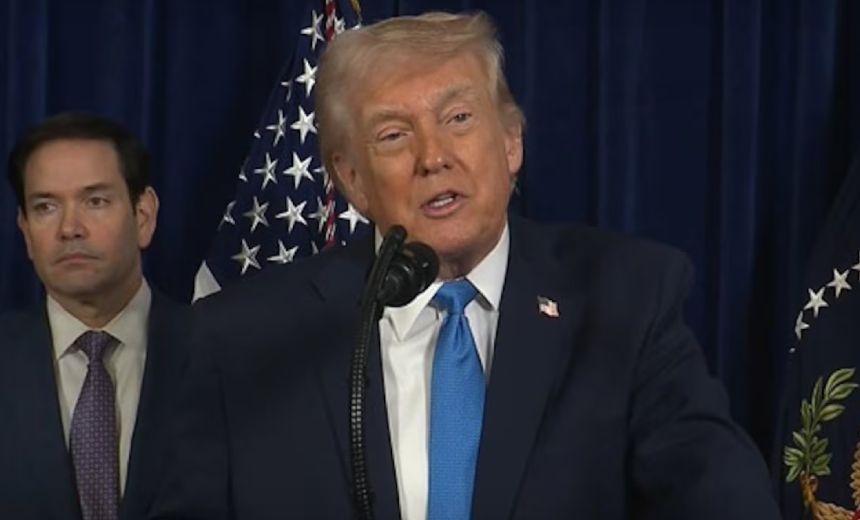
Here’s what we know: The United States launched an armed attack against Venezuela Friday night involving multiple explosions in the capital city of Caracas, where special forces whisked away the South American country’s authoritarian president to face charges of narco-terrorism.
See Also: OnDemand | North Korea’s Secret IT Army and How to Combat It
Here’s what we don’t know: Whether the Caracas grid outage triggered by the U.S. incursion was caused – or at least aided – by a cyberattack.
“Lights in Caracas were largely out due to a certain expertise that we have,” was all that U.S. President Donald Trump has said about the matter. During a press briefing, U.S. Chairman of the Joint Chiefs of Staff John Daniel Caine listed Cyber Command among the agencies involved in the strikes. As its military forces approached Venezuela, “the United States began layering different effects provided by Space Com, Cyber Com, and other members of the interagency, to create a pathway,” he said, referring to Space Command and Cyber Command.
A coordinated attack involving a cyber component against an adversarial electrical grid wouldn’t be unprecedented. Cybersecurity firm Mandiant in November 2023 disclosed that the Russian army successfully tripped the circuit breakers of a power grid substation in Ukraine in a hacking incident that coincided with mass missile strikes on critical infrastructure across Ukraine (see: Russian Sandworm Hackers Caused Power Outage in October 2022).
But that incident is an outlier among publicly known incidents of Russian cyber war against its European neighbor. The Kremlin hasn’t stopped pummeling Kyiv with cyberattacks – but early on in the war, analysts found that coordination between kinetic and cyber attacks dropped precipitously due to the complexity of targeting and coordinating cyber effects with physical outcomes (see: Russia-Ukraine War: Cyberattacks Fail to Best Partnerships).
Still, cyberattacks can excel when the goal is sabotage, as the United States may have demonstrated only weeks ago in an apparent cyberattack that crippled Venezuela’s oil and gas infrastructure. Petroleum of Venezuela, known as PDVSA for its Spanish acronym, said in a Dec. 15 social media that it suffered a cyberattack it characterized as part of an American strategy to take control of Venezuelan oil through “force or piracy.”
“This is what U.S. Cyber Command was built to do,” a former federal cyber official told Politico several days later.
Trump on Saturday multiple times vowed that occupation of Venezuela – he said the U.S.” will run the country until such time as we can do a safe, proper and judicious transition” – will be paid for by extracting the country’s oil reserves.
Social media exploded over the weekend with posts about the invasion, many of them predictably disinformation. BBC Shayan Sardarizadeh started a running thread of false claims including videos purporting to depict U.S. military action that actually was Iranian missile strikes last year on Israel. Deep fakes have also run rampant on outlets including TikTok, supposedly showing explosions in Caracas or captured Venezuelan President Nicola Maduro in military custody.