

Agentic AI
,
Artificial Intelligence & Machine Learning
,
Next-Generation Technologies & Secure Development
Varonis CEO Yaki Faitelson Warns Misconfigured AI Is an Accident Waiting to Happen
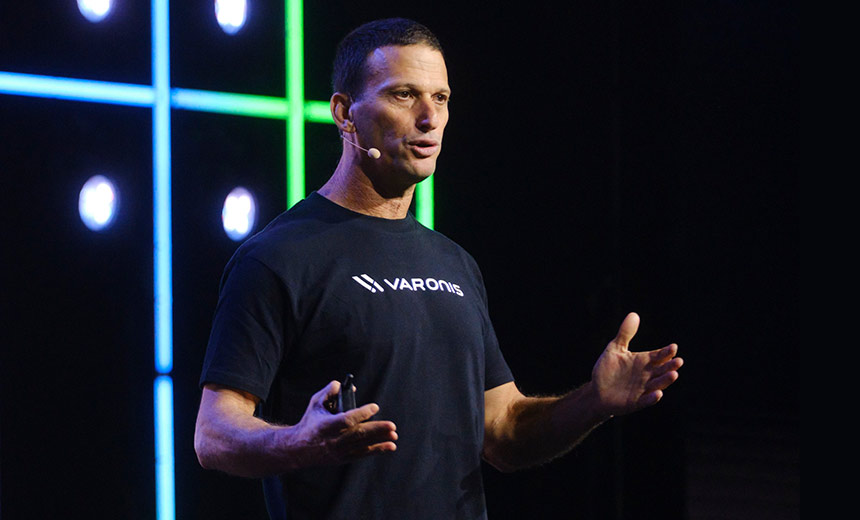
Varonis plans to purchase an artificial intelligence security startup led by the ex-CEO of jSonar to obtain deep visibility, guardrails and life cycle coverage for AI agents.
See Also: Proof of Concept: Bot or Buyer? Identity Crisis in Retail
The Miami-based data security vendor said its proposed acquisition of Vancouver, British Columbia-based AllTrue.ai will integrate AI agent behavior with data classification, permissions and abnormal behavior detection, said co-founder and CEO Yaki Faitelson. AI agents are only as safe as the data they access, and he said misconfigurations can lead to catastrophic data exposure at unprecedented speed.
“At the core of it, AI security is a data security problem,” Faitelson told Information Security Media Group. “The model is as good as the data that you feed them.”
AllTrue.ai, founded in 2025, employs 32 people and has been led since April 2025 by Ron Bennatan, who founded database security startup jSonar in 2013, sold it to application and data security powerhouse Imperva in October 2020, and stuck around for two years to lead Imperva’s data security business. Varonis will pay $126 million for AllTrue.ai, and the acquisition is expected to close by the end of March (see: Varonis Acquires SlashNext to Combat Phishing, Email Attacks).
What Made AllTrue.ai Stand Out From Competitors
AI models, agents and copilots derive their power and their risk from the data they are allowed to access, and the quality, sensitivity, classification and permissions of that data determine the magnitude of potential damage if something goes wrong, Faitelson said. Unlike human users, AI agents operate continuously and at machine speed, meaning mistakes propagate instantly and at massive scale.
“The issue is they’re like Pac-Man from hell,” Faitelson said. “They, by design, take the maximum permissions they have, and if it’s misconfigured, immediately lose a lot of information, or we can have the wrong data set. It’s an accident waiting to happen.”
Varonis saw the need for AI security capabilities but determined that building everything internally would take too long in a market moving at extraordinary speed, Faitelson said. AllTrue.ai rose above other potential acquisition targets in its ability to inventory AI agents, apply guardrails and provide actionable visibility into how AI systems behave in production environments, Faitelson said.
“AllTrue was just head and shoulders better than anything we saw in terms of the inventory, in terms of the guardrails, and in terms of the visibility and outcomes they provide,” Faitelson said. “And the other thing is the founder Ron Bennatan. He’s a world-class data security expert.”
AllTrue.ai offers breadth of coverage across compliance, threat modeling, configuration management, reporting quality and runtime guardrails, Faitelson said. He said AllTrue’s architecture also makes it easier to connect agent activity with identity systems and data security controls, making it suitable for enterprise-scale deployment rather than experimental or point-solution use, Faitelson said.
“The coverage was much better,” Faitelson said. “Everything that related to compliance, red teaming, configuration management, the quality of reporting, the way that it builds, our ability to integrate with it was just head and shoulders above everything else. And also the guardrails configuration has been much, much better than anything else we saw in the market.”
How Varonis and AllTrue’s Capabilities Fit Together
AllTrue covers the beginning and the end of the AI life cycle where agents are created, configured, observed and governed, while Varonis has deep expertise in the middle of that life cycle around identity, permissions, data access, classification and behavioral analysis. This integration helps organizations understand not just what AI agents exist, but what they are actually doing to enterprise data, he said.
“AllTrue starts the whole AI life cycle and ends the AI life cycle, and the middle of it is everything that’s related to the identity and the data,” Faitelson said. “And this is what Varonis does extremely well. If you look at the overall cycle of AI security, we just have the most comprehensive and deep solution now.”
Enterprises often don’t know how many agents they have, which models they are using, what tools they are connected to, or which identities they operate under, Faitelson said. Without configurable guardrails, AI agents can access systems like Jira, Salesforce, databases and internal pipelines or access restricted data by delegating requests to other agents with higher permissions, Faitelson said.
“You see velocity and speed that you’ve never seen before,” Faitelson said. “You see these agents from all over the place, you see a lot of trial and error. So first, the inventory, you will not know what you have or don’t have. And these robots are accessing data at staggering speed.”
DSPM tools rely on sampling and static discovery, making them blind to identity takeovers, abnormal behavior and forensic analysis, while real AI security requires understanding how data flows through systems, how identities behave over time and how AI agents interact dynamically with data. AI systems cannot be secured without deep data visibility, and data security cannot remain static, Faitelson said.
“DSPM are not security solutions. They’re data discovery solutions, and a lot of them are sampling-based, so you will not be able to understand if you have an identity takeover, if there is any abnormal behavior,” Faitelson said. “You will not even be able to do forensics or to right-size permissions. So, this is not the problem. The problem is how data flows and how they are touching data.”