

Application Security
,
Artificial Intelligence & Machine Learning
,
Events
Foundation Capital’s Sid Trivedi on the Three Markets AI Labs Can’t Easily Enter
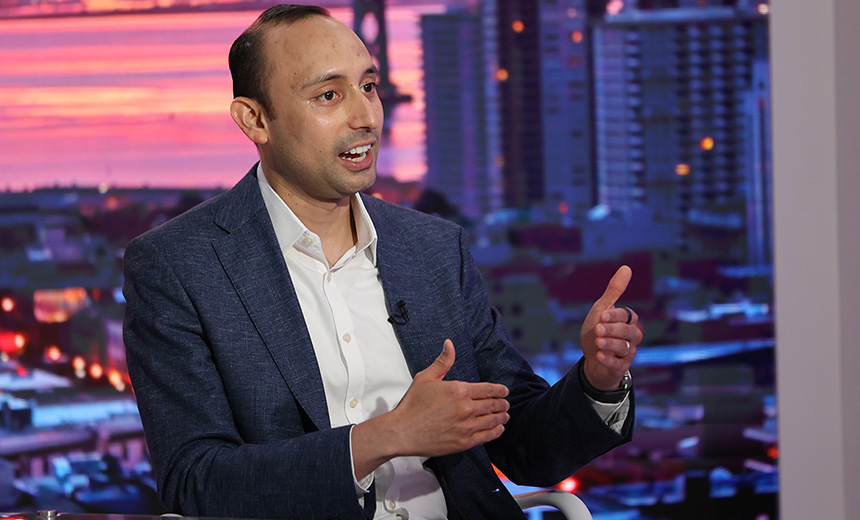
Artificial intelligence labs entered cybersecurity through its most obvious door: application security. Moving from static analysis into dynamic testing was a natural extension of their code generation capabilities. But that is where the disruption has clear limits.
See Also: Taming the Rise of Shadow AI Agents
“The labs are mostly focused on horizontal value. For them, going deeply embedded into security doesn’t make a lot of sense,” said Sid Trivedi, partner at Foundation Capital.
Within that constraint, as AI-generated code increases, securing that output has become a natural adjacency, pushing labs deeper into development-stage security.
Trivedi identified three areas less likely to be disrupted: runtime sensors that require deep endpoint build-out, security functions built on proprietary data that can’t be publicly trained on, and SOC and incident response workflows that depend on multi-tool integrations and embedded context. Identity, however, remains a key frontier, he said.
In this video interview with Information Security Media Group at RSAC Conference 2026, Trivedi also discussed:
- Why Google holds the strongest end-to-end position among AI labs in cybersecurity;
- How AI labs may eventually replicate the cloud service provider model of owning identity at scale;
- How automating testing workflows are emerging as the next expansion layer beyond AI-driven code generation.
Trivedi invests across Foundation Capital’s enterprise stack and leads the focus on cybersecurity and IT infrastructure. Before joining Foundation Capital, he was an investment associate at Omidyar Technology Ventures, investing in and counseling early-stage enterprise software companies.