

Artificial Intelligence & Machine Learning
,
Government
,
Industry Specific
New Programs Aim to Counter Foreign Influence Over Tech Standards
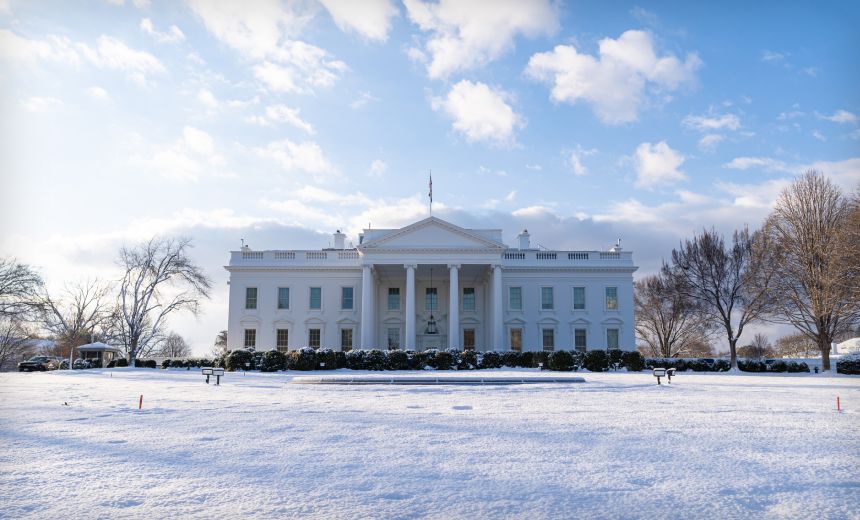
The White House has launched a series of initiatives to operationalize President Donald Trump’s artificial intelligence action plan, unveiling new export programs, technical standards and a “U.S. tech corps” – all aimed at cementing America’s dominance in the global AI race.
See Also: New Trend in Federal Cybersecurity: Streamlining Efficiency with a Holistic IT Approach
White House Office of Science and Technology Policy Director Michael Kratsios announced the efforts during the India AI Impact Summit 2026, saying the United States would empower allies with what he described as the “American AI stack,” while rejecting centralized global governance models. The initiatives are designed to support the AI action plan released in July 2025, which calls for accelerating domestic AI deployment, expanding American technology exports and countering foreign influence over global technical standards.
The announcement is a key step in implementing the president’s broader action plan, which drew praise from industry groups eager for lighter regulatory touch – though it also sparked warnings from cybersecurity experts who said rapid AI expansion without guardrails could amplify systemic risks (see: Trump’s AI Plan Sparks Industry Praise and Warnings of Risk).
At the summit, Kratsios urged partner nations to reject what he characterized as centralized global governance models for AI.
“Real AI sovereignty means owning and using best-in-class technology for the benefit of your people, and charting your national destiny in the midst of global transformations,” the director said. He also argued that independent national strategies built on American infrastructure offer a more practical path than fully self-sufficient tech ecosystems.
Central to the administration’s pitch is a newly launched American AI Exports Program, which officials said will package U.S. hardware, cloud infrastructure, models and cybersecurity controls into modular export offerings tailored to partner countries. The program is designed to position U.S. technology as the default foundation for national AI deployments abroad, particularly in critical sectors such as healthcare, energy, agriculture and citizen-facing government services.
The White House also announced the National Champions Initiative, a Commerce Department-run program integrating leading AI firms from partner countries into customized export stacks built around U.S. components. Officials said the goal is to demonstrate that American platforms can strengthen domestic innovation ecosystems instead of displacing them.
The administration also announced the creation of a U.S. Tech Corps, a new Peace Corps initiative that will dispatch volunteer technologists to assist partner governments with the “last mile” of AI deployment. The program envisions engineers and data specialists embedded with foreign ministries and public agencies to help operationalize AI systems in areas such as digital identity, fraud detection and public health analytics.
Treasury also will launch a new World Bank fund focused on overcoming AI adoption barriers, while additional programs at the Export-Import Bank, the U.S. International Development Finance Corporation, the State Department and the Small Business Administration will be aimed at “de-risking” American AI exports in the private sector.
The National Institute of Standards and Technology also previewed its AI Agent Standards initiative, which will seek to develop interoperable and secure standards for agentic AI. In previous reporting on the administration’s AI blueprint, analysts told Information Security Media Group that enthusiasm for accelerated deployment must be matched with concrete security controls – especially as generative and agentic systems begin to influence financial markets, supply chains and defense operations systems.
Government leaders from Europe and Asia at the India AI Impact Summit called for sovereign AI models that will support multi-lingual processing. European nations are backing EU-based models such as Mistral AI, while India is investing heavily in domestic infrastructure to support AI.
“India chose granular and smart, and Europe chose sovereign and scaled. But both chose independence, and both were right,” French President Emmanuel Macron told attendees at the summit last week.
The White House did not respond to a request for comment.