

Agentic AI
,
Governance & Risk Management
,
Network Detection & Response
Acquisition Focuses on Validating AI Agents, Models in Critical Security Workflows
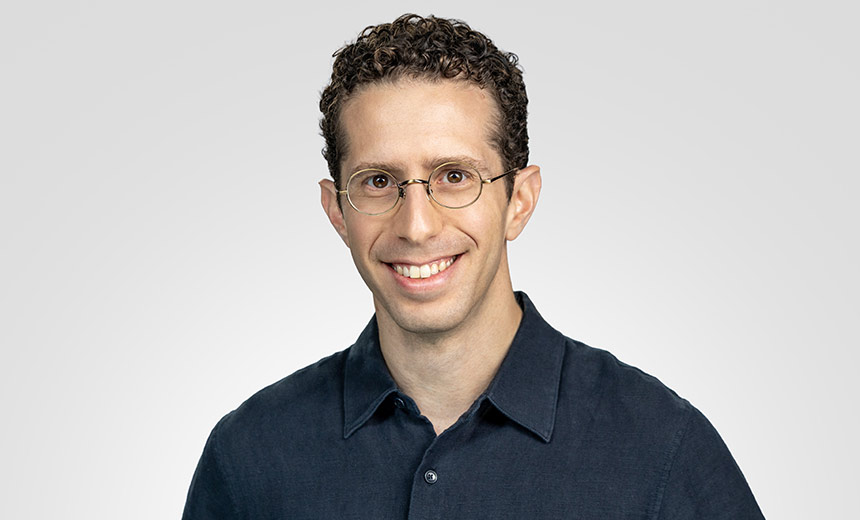
Check Point Software will purchase a startup founded by the Israel Defense Forces’ ex-data science leader to improve confidence and trustworthiness in autonomous security systems.
See Also: Privilege Blind Spots: Part 1, Uncover Risk from Siloed Identity Tools
The Silicon Valley-based platform security titan said its proposed acquisition of Tel Aviv-Israel based Deepchecks will help organizations test, evaluate and monitor machine learning systems, and agentic workflows, said Chief Technology Officer Jonathan Zanger. He said that expertise became particularly valuable as generative artificial intelligence systems introduced new operational risks such as hallucinations.
“What they have been building over the past five years or so is really a platform approach and expertise in evaluating how good models are,” Zanger told ISMG. “They are data scientists and AI folks who will understand how to evaluate models and actually build a platform that’s focused on testing the evaluation of monitoring solution for agents.”
Deepchecks, founded in 2019, employs 15 people and closed a $14 million seed funding round in June 2023 led by Grove Ventures. The company has been led since its inception by Philip Tannor, who previously spent nearly seven years in the Israel Defense Forces, including two-and-a-half supervising research focused on computer vision, natural language processing and signal processing (see: Why AI Agents Are Forcing a Rethink of Enterprise Security).
How AI Agents Can Explicitly Acknowledge Uncertainty
Zanger said Check Point is rethinking what network security administration will look like over the next several years as AI systems become more autonomous and integrated into operational environments. The firm is studying how AI agents themselves will behave inside enterprise networks and exploring how security administrators and practitioners will interact with AI-powered systems in the future, he said.
“How can you make sure that the agents are actually behaving correctly?” Zanger said. “How do we make sure that they operate in the right guardrails since those missions that those agents are dealing with are always mission critical? We were looking for a team with the expertise of making sure that agent and models are doing what they’re supposed to do.”
Check Point’s new platform is designed to help organizations administer complicated network security environments by allowing autonomous agents to assist with configuration, analysis and operational tasks while humans keep oversight. The platform uses AI-driven agents that can understand context, reason about infrastructure and help security administrators execute projects more efficiently.
“When we bring their knowledge system into our network security orchestration, we can actually guarantee that when CISOs ask agents to handle major projects like microsegmentation, we can actually make sure that those agents are behaving as well as expected,” Zanger said. “So, in many ways, they enhance the level of trust that we have in an AI system for critical network security management.”
Mission-critical security systems can’t tolerate hallucinations, inaccurate responses or unpredictable behavior from AI agents because these systems are responsible for protecting sensitive infrastructure and enforcing access controls, Zanger said. Check Point’s goal is to ensure that AI agents either provide correct answers or explicitly acknowledge uncertainty rather than generating fabricated responses.
“Whenever models are being generated and built, they have a source of truth that can be monitored, and make sure that the agent acts in one of two ways: either gets the right answer, or returns that he doesn’t know the right answer,” Zanger said.
How to Validate Agentic Workflows With Different Outputs
Evaluators of enterprise or GenAI systems must determine whether the output is contextually correct even when responses vary from one interaction to another, Zanger said. Deepchecks developed intellectual property specifically focused on validating agentic workflows where the reasoning process and outputs may differ from one interaction to another while still achieving the correct result, he said.
“When we are dealing with GenAI, the answer can change but still be correct,” Zanger said. “So, when I ask ChatGPT a couple of questions, I can get multiple answers and all of them are correct. Evaluating the correctness of those answers – despite the fact that they might be inconsistent but all true – is part of Deepchecks.”
Identifying crown jewels within an enterprise network means AI agents must ask the right questions, access the correct internal data sources and consistently generate accurate operational guidance, Zanger said. Deepchecks’ technology helps verify that these systems interact with trusted sources properly and don’t hallucinate or behave unpredictably during critical security operations, he said.
“We realize that we want their full attention working on what we define as one of the more impactful problems in cybersecurity right now,” Zanger said. “Once we got them excited with our mission, and they were happy to engage full-time in doing that.”
Although the initial emphasis is on network security orchestration, Deepchecks will help provide an additional layer of validation, trust and optimization across the platforms, Zanger said. He specifically mentioned applications involving threat prevention, threat intelligence and AI security capabilities. The company ultimately intends to embed Deepchecks’ validation technology throughout the portfolio.
“We believe that trust is a very big part of the willingness of security practitioners to adopt this kind of technology, and the ability to show them how accurate actually their agents are will boost the confidence in the ability to adopt this new and disruptive technology,” Zanger said.