

Government
,
Industry Specific
Secretary Mullin Defends Trump’s CISA Cuts Despite New Duties – and Threats
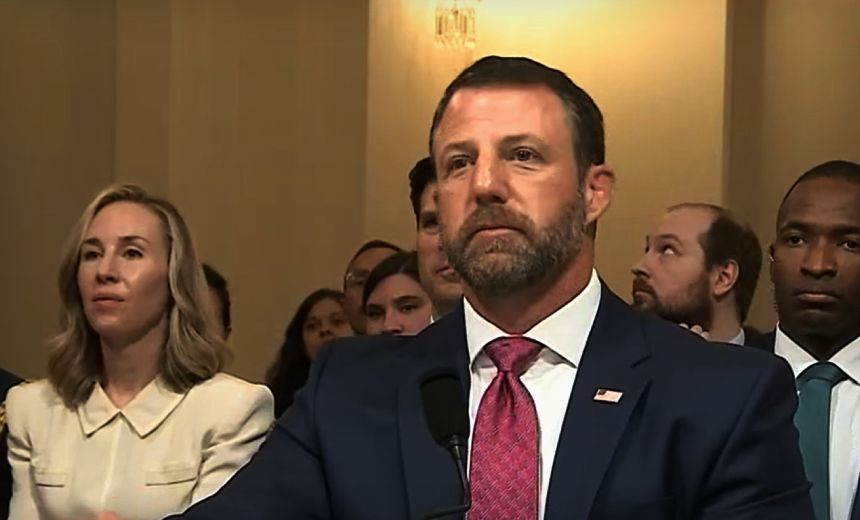
Homeland Security Secretary Markwayne Mullin on Wednesday defended the Trump administration’s ongoing restructuring of the U.S. Cybersecurity and Infrastructure Security Agency, arguing that a smaller workforce can remain effective if the agency relies more heavily on state and local partners and the private sector.
See Also: New Trend in Federal Cybersecurity: Streamlining Efficiency with a Holistic IT Approach eBook
Mullin told the House Homeland Security Committee the administration’s vision for CISA aims to return the agency to what Trump administration officials describe as its “core mission” – while shifting more cybersecurity responsibilities and resources closer to state and local governments.
“We had to readjust the way we’re looking at CISA and better lean on public partnerships,” Mullin told lawmakers. “If we can actually have the partnerships we need with states and be able to use the grants, the monies that are saved with CISA to be able to invest with local and state municipalities … we’re not going to fail on the mission we have in front of us.”
CISA currently employs roughly 2,200 personnel, according to Mullin. The agency employed approximately 3,400 workers at the start of President Donald Trump’s second term but endured significant attrition as top talent left for the private sector and through buyouts, retirements and workforce reduction efforts.
The White House has repeatedly argued under Trump that CISA expanded beyond its intended mission during previous administrations and should now focus primarily on protecting federal civilian networks and critical infrastructure operators (see: CISA Trying to Get Back on Its Mission After Trump Cuts).
Mullin’s testimony comes as Congress continues raising concerns over whether CISA can maintain operations while absorbing staffing losses and operating without Senate-confirmed leadership. The agency has spent much of the past year under acting leadership following a series of personnel changes at DHS (see: No Vote, No Leader: CISA Faces 2026 Without a Director).
Lawmakers raised concerns that workforce reductions could reduce the agency’s ability to support federal agencies, critical infrastructure operators and state and local governments. But Mullin argued that DHS can achieve better outcomes by directing resources toward grants and partnerships that allow state and local entities to build their own cybersecurity capabilities.
State and local governments have drawn on a $1 billion cyber grant program established in 2021 whose authorization expires in September (see: State Officials Urge Congress to Renew Cyber Grant Program).
The administration’s fiscal 2027 budget proposal would transfer several programs currently housed within DHS’s Countering Weapons of Mass Destruction Office to CISA, including BioWatch and Securing the Cities. The move would further expand the agency’s responsibilities in areas tied to critical infrastructure and national resilience.
Current and former officials have questioned whether CISA can effectively absorb additional responsibilities while operating with a smaller workforce and reduced resources. Those concerns were reignited earlier this year when a prolonged DHS funding lapse raised questions about how many CISA personnel would remain available to respond to cyber incidents and support federal network defense operations (see: CISA Forced Into Reactive Cyber Posture Amid Shutdown).