

Artificial Intelligence & Machine Learning
,
Cloud Security
,
Next-Generation Technologies & Secure Development
Startup Native Targets Enterprise Policy-to-Architecture Gap Across Clouds
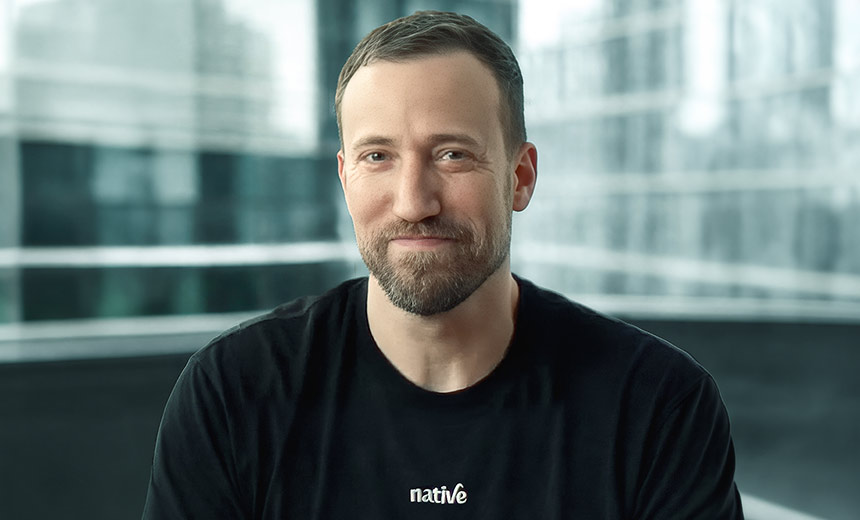
A startup founded by a former Amazon Web Services product leader emerged from stealth with $42 million to transform security policies into enforceable cloud architecture.
See Also: Proof of Concept: Bot or Buyer? Identity Crisis in Retail
The Ballistic Ventures-led $31 million Series A funding round will enable Native to address more advanced use cases around artificial intelligence security as well as new environments and deployment models, said co-founder and CEO Amit Megiddo. He said Native enables organizations to replicate and enforce security architectures across environments, improving efficiency and reducing the need for specialized personnel.
“There’s something real here that now we feel is ready for the market, and now’s the time to let the world know about it,” Megiddo told Information Security Media Group. “The $11 million seed allowed us to set that initial core R&D team, build an enterprise-ready product and bring it to a place where it’s bringing substantial value and impact and allowing us to deploy in these type of organizations.”
Native, founded in 2024, employs 38 people and has been led since its inception by Megiddo, who spent nearly six years leading AWS’ GuardDuty threat detection service. Prior to that, Megiddo spent more than 11 years with the Israeli Military Intelligence, culminating in a role leading 16 computer scientists, data analysts and linguists focused on highest-priority national security issues.
Translating Security Policies Into Enforceable Controls
Native chose to remain in stealth until it had achieved meaningful validation from Fortune 100 and Fortune 500 organizations that found the product operationally critical in real-world environments, Megiddo said. The company plans to continue investing in R&D to ensure the product evolves in line with increasingly complex enterprise needs.
“We wanted to see a certain level of traction in the market and validation from the market working behind the scenes and still in stealth,” Megiddo said. “Now, it’s just a matter of making sure as many people know about this, and putting fuel into the fire when it comes to distribution, the go-to-market engine that we’re building.”
Most organizations already define security policies but struggle to translate those abstract policies into actual, enforceable controls within complex cloud environments, Megiddo said. Native configures and maintains cloud environments so that the desired security outcomes are inherently enforced through predefined policy frameworks that can be applied and adapted to different environments, he said.
“Everyone has this policy written somewhere in a document,” Megiddo said. “But turning that into enforceable architecture that evolves with the environment is extremely challenging in one cloud, let alone across clouds. This is actually architecting the environment in a way that enforces this to be true.”
Organizations that have invested heavily in securing one cloud like AWS often struggle to replicate those controls across Azure, Google Cloud or Oracle, Megiddo said. Native enables them to extend and standardize their security architecture across multiple platforms without duplicating effort, which Megiddo said makes it especially valuable for enterprises operating at scale.
“Organizations that already have their CNAPP, CSPM in place know what they get from it,” Megiddo said. “They know that it’s not their complete answer to cloud security, and they’re ready to move toward that next phase of a more policy, intent-driven, secure by design architecture-driven approach to cloud security. Those are the type of organizations that are ready for us.”
Ensuring AI-Generated Code Doesn’t Violate Security Policy
Native wants to integrate identity and network controls, enforce segmentation between production and non-production environments, and introduce guardrails for AI workloads to address complex security challenges that go beyond basic policy enforcement. The company also wants to support additional cloud environments, deployment models and potentially non-cloud use cases in the future, he said.
“We’re able to take security outcomes or intents or objectives and translate them into the native configurations, controls and policies, taking a goal and turning it into something that is enforceable at the platform level and that can apply across use cases,” Megiddo said. “We’re very focused now on the public cloud again. There’s a very strong need there, and that’s what the world we come from.”
AI-generated code creates misconfigurations or unintended exposure of sensitive data, which Native addresses by enforcing guardrails that ensure AI-driven changes do not violate security policies. Firms need confidence their AI systems are operating within defined boundaries using approved data, models and environments, and Native does this by translating AI-related policies into enforceable controls.
“You increasingly have agents and LLMs writing code that is driving infrastructure changes and that could have a negative impact on the environment, basically breaking your production,” Megiddo said. “You want to architect your environment in a way that does not allow those sort of things to happen, so that you can then leverage AI extensively in those environments with the right guardrails in place.”
Unlike tools like CNAPP and CSPM which primarily provide visibility, Megiddo said Native focuses on enforcement and orchestration of native cloud controls. Other competitors are expected to emerge within the next six-to-18 months, but Megiddo said Native has a first-mover advantage both in identifying the problem early and in developing a broader, more comprehensive vision.
“When there’s a need, you can expect there’s other companies probably six-to-18 months behind us that are starting to pop up and sound the same,” Megiddo said. “We’re thinking about it fundamentally different. We have a bit of a broader vision.”