

Agentic AI
,
Artificial Intelligence & Machine Learning
,
Identity & Access Management
Startup Acquisition Adds Centralized Policy Control Over Agent Communications
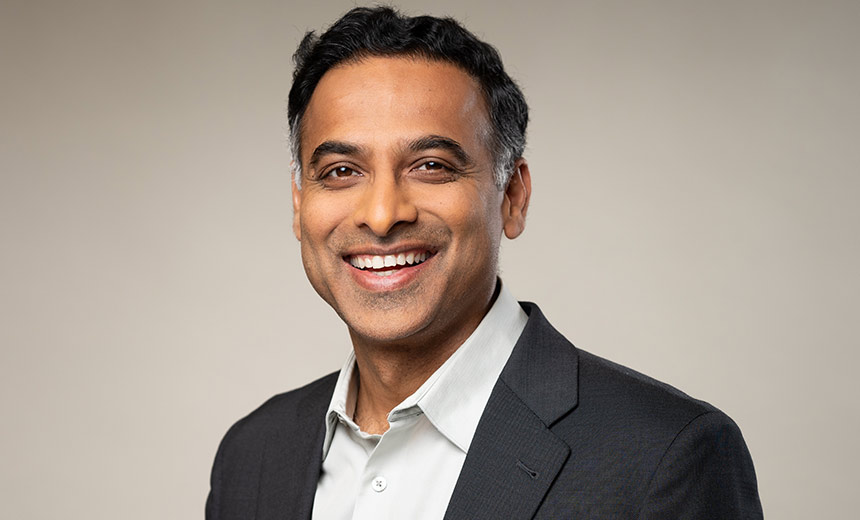
Palo Alto Networks plans to purchase a startup founded by an ex-Pepper and Freshworks product leader to funnel artificial intelligence agent communications through a centralized gateway.
See Also: Redefining Digital Resilience for the AI Era
The Silicon Valley-based platform security titan said its proposed acquisition of San Francisco-based Portkey will help organizations enforce consistent security policies, monitor activity and apply protections in real time, said Executive Vice President of Network Security Anand Oswal. Without such centralization, he said enterprises risk fragmented visibility and inconsistent controls across thousands of agent interactions.
“We want all communication of agents to go through a centralized gateway,” Oswal told ISMG. “The gateway is in the right place where I can have an agent registry, I can apply all the runtime protections, I can have identity protections, I can have AI governance, I can have complete observability of the entire steps along the chain. And that’s really where Portkey helps fill in the gap.”
Portkey, founded in 2023, employs 47 people and has raised $18 million, having recently completed a $15 million Series A funding round led by Elevation Capital. The company has been led since its inception by Rohit Agarwal, who previously spent two years as head of product for AI writing assistant Pepper and more than five years leading product management for customer support software platform Freshworks (see: Koi Purchase Bolsters Palo Alto’s AI Attack Surface Defense).
How Portkey Provides Visibility Into AI Agent Behavior
Whether embedded in endpoints, SaaS platforms or cloud environments, agents need broad permissions from local file systems to external repositories and APIs. This creates a situation on which a compromised agent could act with the same privileges as a user or system, dramatically increasing the potential blast radius, Oswal said.
“If agents really need to act autonomously, they will need broad permissions,” Oswal said. “Even your agents on your laptop that people use while coding need access to the local file system. They need access to third-party GitHub repositories. They need access to the internet. And all of this increases the attack surface.”
Portkey is already processing trillions of tokens, which Oswal sees as evidence of real-world readiness. Equally important is its developer-friendly design, which Oswal said requires minimal effort to onboard new agents. And Portkey’s open-source adoption has also driven widespread usage, Oswal said, providing validation across enterprises of varying sizes.
“They’re being used by many large customers, Fortune 500 customers,” Oswal said. “They’re running at scale. They’re having trillions of tokens passed to the AI gateway already today. So it’s a very proven, hardened solution.”
Portkey’s gateway will become the operational backbone for AI systems, with Oswal highlighting its role in enabling full observability into agent behavior, including every step in a transaction chain. It also supports governance by enforcing policies and maintaining an agent registry, which Oswal said is critical for continuous monitoring and assessment, especially as agents evolve and interact in real time.
“The gateway becomes the central conduit for all the traffic, and the best place to apply some of these controls on a runtime agent registry for observability, governance and identity,” Oswal said.
How Portkey Fits Into Palo Alto’s AI Security Playbook
Portkey is being integrated into Palo Alto Networks’ Prisma AIRS solution to create a unified platform for securing AI applications and agents, Oswal said. This platform spans the entire life cycle from model scanning and red teaming to runtime protection and posture management, and Oswal said the addition of the AI gateway fills a critical gap by providing centralized control during production.
“By funneling all these AI transactions to an AI gateway, you can build an agent registry,” Oswal said. “You can apply runtime protections, identity protections, can institutionalize all things around AI governance and get complete agent observability. Because you want to do continuous assessment on your agents and the artifacts.”
As agents take on more responsibilities, Oswal said identity becomes a foundational element of security. He emphasized the importance of integrating identity controls through CyberArk to manage permissions effectively, including enforcing least privilege, preventing misuse and enabling just-in-time access. In an agent-driven world, identity is not only about users but it also extends to machines acting autonomously.
“Agents are going to act autonomously,” Oswal said. “Agents are going to have a life cycle, and when agents have to do things, they need permission to do things.”
While AI gateways share conceptual similarities with traditional network gateways, their functionality is fundamentally different since they must handle interactions with LLMs, support new communication protocols and manage autonomous decision-making processes, Oswal said. The complexity of these interactions requires a new architectural approach that goes beyond conventional network security.
“A year back, no one talked about an agent,” Oswal said. “Now, all we do is talk about agents.”